

Have you ever wondered if you can use calligraphy ink in a fountain pen? Many enthusiasts who cherish the fluidity of traditional calligraphy ink are curious about blending that art with the convenience of a fountain pen. The truth is, while it’s an appealing idea, it comes with important considerations you need to know. This exploration will demystify the compatibility of calligraphy ink with fountain pens, addressing potential issues and benefits. By understanding the nuances, you can make informed decisions that enhance your writing experience without damaging your favorite pens. Dive in as we unveil the facts and guide you through the best practices for using ink in your fountain pen.
Understanding Fountain Pens vs. Calligraphy Pens
Understanding the differences between fountain pens and calligraphy pens can greatly enhance your writing experience. While both are designed for expressive writing, they serve different purposes and are constructed differently.
Fountain pens are versatile writing instruments that use a nib and ink reservoir, allowing for smooth, continuous writing. They come in a variety of nib sizes and styles, offering flexibility from everyday note-taking to more elaborate writing tasks. With a fountain pen, you can achieve varying line widths simply by adjusting your writing pressure or angle.
On the other hand, calligraphy pens are specially designed for artistic writing and lettering. These pens often feature broader, stiffer nibs that make it easier to create thick and thin lines essential for calligraphy effects. Many calligraphy pens are dip pens, requiring the user to reload ink frequently, while others might be cartridge-based. The emphasis with a calligraphy pen is on producing decorative scripts rather than everyday writing.
When it comes to ink, fountain pen ink is typically liquid and less viscous, allowing for smooth flow through the pen’s feed system. Calligraphy ink, however, can be thicker and might contain additional dyes and materials for richer texture and color saturation. This distinction in ink composition can be a crucial factor, especially when considering whether to use calligraphy ink in a fountain pen. Understanding these fundamental differences not only informs your choice of writing instrument but can also enhance your overall writing experience, ensuring that you pick the right tool for your creative endeavors.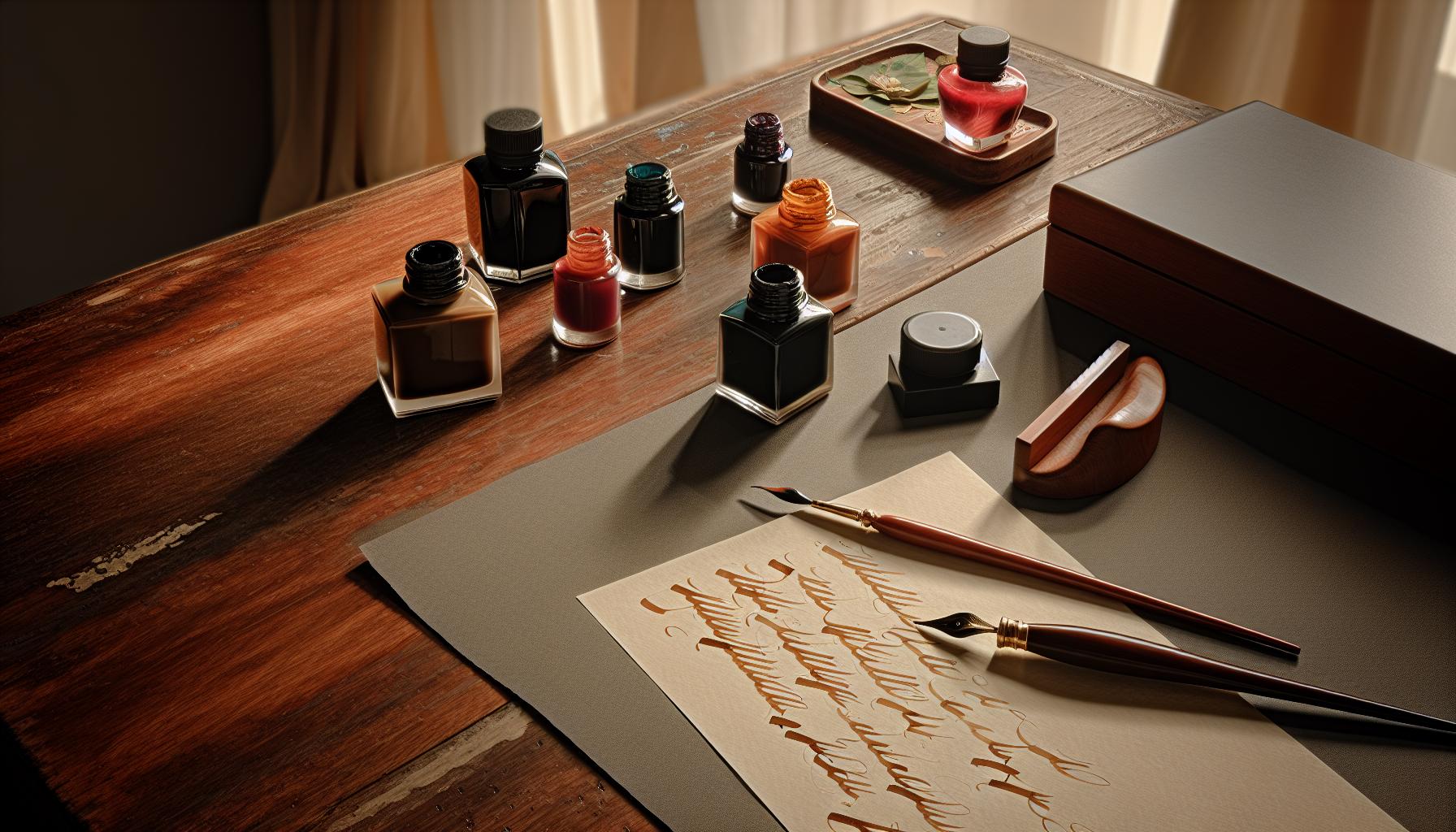
What Makes Calligraphy Ink Different?
Calligraphy ink stands out from standard fountain pen ink in several important ways that can greatly influence your writing experience. The most significant difference lies in its viscosity. Calligraphy ink is typically thicker and denser, which allows for the creation of those distinctive bold strokes and fine details that define beautiful lettering. This increased viscosity can result in richer color saturation, meaning your letters can have a more pronounced depth that standard inks may not achieve.
Moreover, calligraphy ink often contains additional components like dyes or pigments, enhancing its aesthetic appeal. These additives help produce vibrant colors and provide a range of finishes-from glossy to matte-that are essential for artistic work. While fountain pen ink is formulated for smooth flow and quick drying times, calligraphy inks are generally designed for more deliberate applications, making them ideal for creating intricate designs and decorative scripts rather than everyday writing.
However, the thickness of calligraphy ink can present challenges if used in fountain pens. Not only can it clog the nib or feed system of your fountain pen, but it may also impede the ink flow if the pen isn’t specifically designed to handle such inks. If you’re tempted to use calligraphy ink in your fountain pen, it’s crucial to consider these aspects. Understanding what makes calligraphy ink different helps you make informed choices, ensuring you select the right ink for your artistic endeavors without compromising your writing instruments.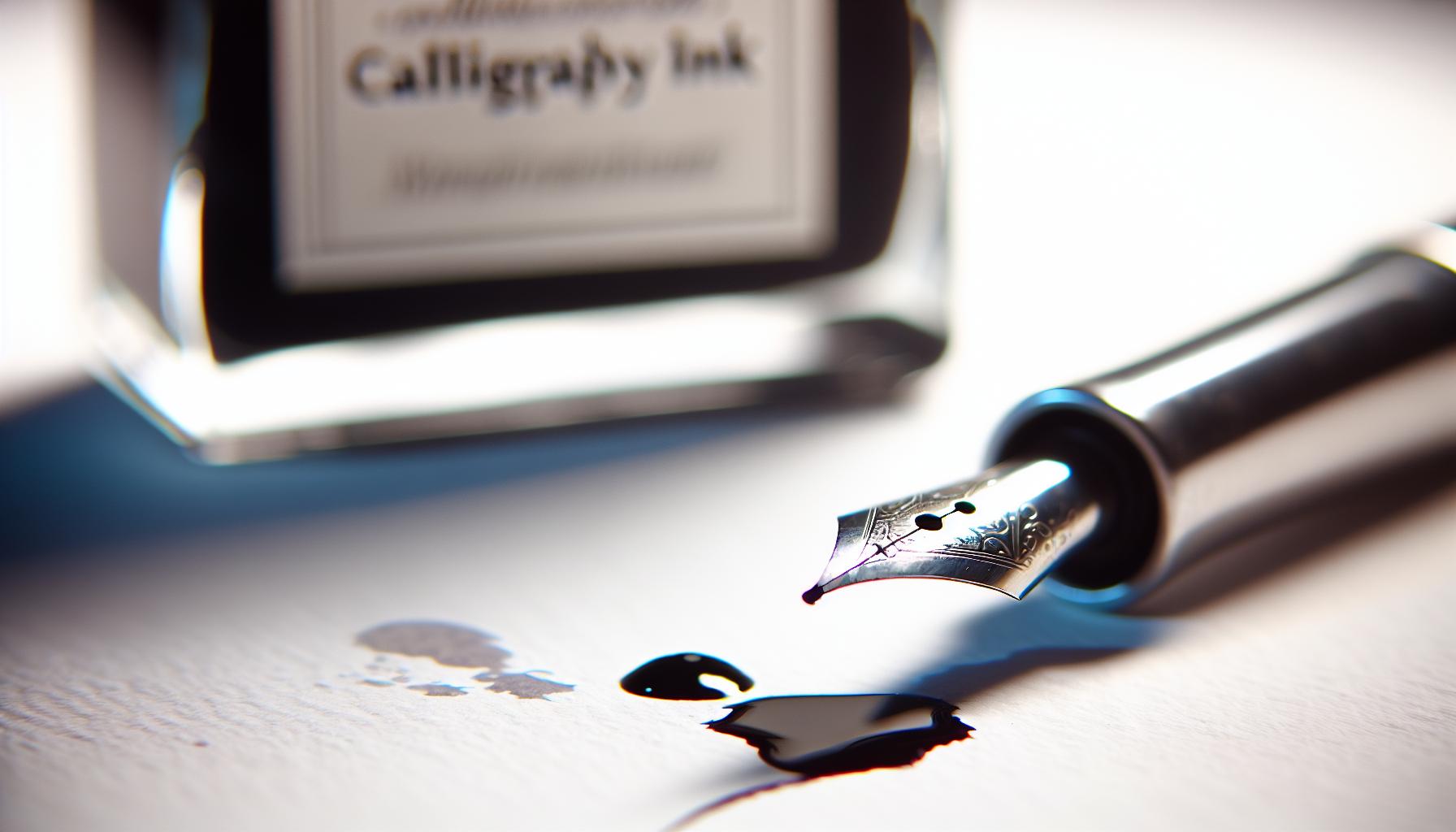
Can Calligraphy Ink Damage Your Fountain Pen?
Using calligraphy ink in your fountain pen might seem appealing for those striving for more artistic expression in their writing. However, there are some important considerations to bear in mind that could potentially damage your beloved writing instrument. First, let’s address the hefty viscosity of calligraphy ink. Unlike standard fountain pen ink, calligraphy ink is thicker and can easily clog the nib or feed system of your fountain pen. This not only disrupts the smooth writing experience you expect from a fountain pen, but it may also lead to more serious mechanical issues over time.
Another point to ponder is the composition of calligraphy ink. Many brands incorporate additional dyes and pigments to enhance color quality and richness. While these additives lead to beautiful results, they can also leave behind residues that are more difficult to remove than traditional inks, especially if allowed to dry in the pen. If you ever decide to use calligraphy ink, be vigilant about monitoring how your pen performs. Should you notice inconsistent ink flow or difficulty in writing, it’s wise to stop using the ink immediately.
To minimize risks, many fountain pen enthusiasts recommend using only inks specifically designed for fountain pens or those that clearly state compatibility with fountain pen mechanisms. If you’re set on using calligraphy ink for its unique effects, consider using an eyedropper or a converter designed for such inks, which allows for more controlled application without risking your primary fountain pen. Always prioritize the health of your pen, as it’s a well-crafted tool intended to give you pleasure in writing for many years.
The Best Fountain Pen Inks: A Quick Guide
When it comes to fountain pen inks, the right choice can transform your writing experience. Not all inks are created equal, and if you’re venturing into the world of calligraphy, the nuances between fountain pen inks and calligraphy inks become even clearer. Using the right ink not only enhances your writing but also protects your fountain pen from potential damage.
To make an informed choice, consider the following key attributes of the best fountain pen inks:
- Viscosity: Ideal fountain pen inks have a balanced viscosity that flows smoothly without clogging your pen. Look for inks specifically designed for fountain pens, which are usually thinner than calligraphy inks.
- Color Range: The best inks offer a wide spectrum of colors. Brands like Staples offer a premium selection where you can explore vibrant hues that suit your artistic needs.
- Compatibility: Prioritize inks that clearly state their suitability for fountain pens. This reduces the risk of residue build-up, which can hinder performance over time.
- Lightfastness and Waterproofing: For long-lasting results, especially if you’re using your writing for art or preservation, choose inks known for their resistance to fading and water.
If you’re mixing it up with calligraphy ink, keep in mind that many calligraphy inks do not behave well in fountain pens due to their thicker composition. They can cause clogs and result in an inconsistent writing experience, which can be frustrating. That said, there are some innovative products designed for dual use; these can provide that artistic flair without risking your fountain pen’s integrity.
Ultimately, the best fountain pen ink is one that aligns with your writing style, your pen’s specifications, and your creative objectives. Testing a few brands and colors can help you find the perfect match, elevating your writing and artistic projects to new heights.
Signs Your Fountain Pen Struggles with Calligraphy Ink
Using calligraphy ink in a fountain pen can be a tempting option for those who love the rich colors and textures it offers. However, it’s essential to recognize the signs that your fountain pen is struggling with this type of ink, as it can lead to some frustrating experiences. First off, if you notice the ink flow becomes inconsistent or sputters during writing, this is often a red flag. Calligraphy inks are generally thicker and can dry quickly, leading to clogs in the nib or feed. This inconsistency can interrupt your writing flow and might require constant adjustments to get things moving smoothly again.
Another telling sign is the presence of excessive ink pooling on the nib or paper. If you see large blobs or streaks forming, your pen is likely unable to manage the thicker viscosity of calligraphy ink effectively. This not only affects the quality of your writing but can also cause smudging, especially if the ink takes longer to dry. Over time, using such inks can also lead to build-up within the pen, making it crucial to keep an eye out for any changes in performance.
If your fountain pen starts making a scratchy sound against the paper or feels abrasive while writing, it could indicate the ink isn’t flowing correctly. This issue often arises when calligraphy ink thickens or dries in parts of the pen, leading to a suboptimal writing experience. It’s vital to stay alert for changes like this because they can signal that maintenance is needed sooner than later.
Finally, if you frequently find yourself needing to clean your pen more often than usual, it’s a clear indication that the calligraphy ink is creating deposits or residue inside the feed system. Regular cleaning is essential to maintain your pen’s performance, but if your cleaning routine becomes a chore rather than just routine maintenance, it might be time to reconsider the type of ink you’re using. Making thoughtful choices about inks can help protect your investment in your fountain pen and keep your writing smooth and enjoyable.
How to Safely Use Calligraphy Ink in Fountain Pens
Using calligraphy ink in a fountain pen can yield beautiful results, but it’s crucial to approach it with care to avoid potential damage. First and foremost, always check the viscosity of the ink. Thicker inks can cause clogs and disrupt the flow, so aim for calligraphy inks that are specifically formulated to be fountain pen friendly. It’s worth noting that some inks are designed with added flow agents; these can provide a smoother experience without the risk of clogging.
When filling your fountain pen with calligraphy ink, consider using a syringe or pipette for precise control and to minimize mess. This method allows you to easily fill your pen without introducing air bubbles, which can disrupt ink flow. After filling, make sure to do a quick test scribble on a scrap piece of paper. This ensures the ink flows well from the nib before committing to your project. If you notice any issues, it’s better to address them early than to discover a problem halfway through your writing.
Regular maintenance is essential when using calligraphy ink. This means cleaning your pen more frequently than you might be used to, especially if the ink is thicker. A simple rinse with water after each use can help prevent build-up. For deeper cleans, you might need to use a pen flush designed for fountain pens. This will help dissolve any residues that could impede performance.
Finally, always be attentive to your pen’s performance. If you start experiencing scratching or inconsistent ink flow, it might be time to switch back to standard fountain pen inks. Your fountain pen deserves the best treatment to keep it running smoothly, so prioritizing the right ink will ensure your writing experience remains enjoyable and hassle-free.
Tips for Choosing the Right Fountain Pen Ink
Choosing the right fountain pen ink can make or break your writing experience. With a myriad of options available, finding the one that suits your needs isn’t just about color-it’s about compatibility with your pen and your writing style. The quality of ink plays a crucial role in how smoothly your pen writes and how vibrant your lines appear on paper. Here are some key tips to guide you in selecting the best fountain pen ink.
First, consider the ink’s viscosity. Thinner inks flow easily, reducing the risk of clogging your fountain pen, while thicker inks can lead to frustrating issues. If you’re tempted to use calligraphy inks, be sure to check if they are specifically labeled as fountain pen-friendly. Not all calligraphy inks are created equal, so opting for those designed to flow smoothly in fountain pens can save you a lot of maintenance woes later.
Another essential aspect is the ink’s drying time. If you often find your work smudged, look for fast-drying inks. Many reputable brands offer inks with varying drying times, catering to different writing styles and preferences. Conversely, if you enjoy a leisurely pace while writing, a longer drying ink might provide richer saturation but at the expense of potential smudging.
Also, don’t overlook the importance of color and shading. Some inks are formulated to produce vibrant, saturated colors that really pop on the page, while others provide subtle shading that can enhance the visual appeal of your lettering. Testing samples can be worthwhile since the same ink may look different depending on the paper you use.
In conclusion, prioritize quality, viscosity, drying time, and color in your ink selection. Making informed choices will not only enhance your writing experience but also prolong the life of your fountain pen.
Cleaning Your Fountain Pen After Using Calligraphy Ink
Using calligraphy ink in your fountain pen can lead to a beautiful writing experience, but it also necessitates diligent maintenance afterward. If you’ve indulged in the dramatic flair of calligraphy ink, it’s crucial to clean your fountain pen thoroughly to avoid damaging it and ensure smooth writing in the future.
First off, always flush your pen immediately after using calligraphy ink. This is because the consistency and composition of most calligraphy inks are different from standard fountain pen inks and can lead to clogging. Begin by disassembling the pen (if applicable), removing the nib and feed if possible. Rinse the nib section under lukewarm water, allowing the water to run through the feed to clear any leftover ink. This step is vital as it helps maintain the integrity of the nib and ensures ink flows freely in the future.
Next, it’s helpful to use a cleaning solution designed for fountain pens, especially if you notice any residual ink that won’t budge with water alone. After soaking the nib in this solution for a few minutes, give it another rinse with water. Make sure to squeeze or gently wipe the nib to extract any remaining liquid.
If you’ve experienced darker or thicker inks, consider doing a deep clean every few months. This involves using a gentle solution, like a pen flush or a diluted ammonia solution (with caution), to help remove any buildup. Allow the nib to soak for a few hours, then rinse and dry it thoroughly before reassembling your pen.
Regular maintenance isn’t just about avoiding clogs-it also keeps your fountain pen performing optimally. Inspect the nib and feed for any remnants of ink, and ensure they’re completely dry before reassembling the pen. If you notice significant staining or drying ink on the nib, a gentle scrape with a soft cloth can help without risking damage.
By keeping your fountain pen clean after using calligraphy ink, you’ll be rewarded with smooth, uninterrupted writing and the longevity of your treasured writing instrument. Celebrate the art of lettering without the stress-just remember that a little cleanup goes a long way!
Common Myths About Fountain Pens and Calligraphy Ink
Nothing causes more debate in the writing community than whether you can safely use calligraphy ink in a fountain pen. Let’s clear the air and squash some common myths surrounding this topic.
One of the biggest misconceptions is that all calligraphy inks are harmful to fountain pens. While it’s true that many calligraphy inks have different properties than standard fountain pen inks-like thickness or pigment-this doesn’t mean that they will always damage your pen. There are calligraphy inks specifically designed to be fountain pen friendly. Look for inks labeled as “fountain pen safe,” which have formulations that flow well and won’t clog your nib or feed.
Another myth that needs debunking is the idea that using calligraphy ink in a fountain pen is a one-way ticket to disaster. Many fountain pen users successfully use calligraphy ink for special projects or artistic lettering without immediate issues. However, it’s essential to be diligent about maintenance afterward. Failing to clean your fountain pen properly can lead to clogs and damage over time. So, while it’s not forbidden, using calligraphy ink requires a commitment to upkeep.
Finally, there’s the belief that you can switch between calligraphy ink and regular fountain pen ink without any consequences. This one is tricky. Even if you thoroughly clean your pen, residual ink can cause unexpected results, like unexpected color mixing or flow problems. It’s wise to dedicate specific pens to calligraphy inks if you use them regularly, allowing for better performance and less hassle.
In short, the interaction of fountain pens and calligraphy ink is nuanced. Embracing this can enhance both your writing experience and the longevity of your pens, as long as you approach it with care and knowledge.
Exploring Alternative Inks for Fountain Pens
Exploring alternative inks for your fountain pen can truly enhance your writing experience, especially when transitioning between different styles such as calligraphy and traditional writing. While many fountain pen enthusiasts stick to a specific brand or type of ink, there’s a whole world of options out there that can add character and flair to your writing.
One of the most exciting alternatives is watercolor ink, which comes in vibrant colors and can be used for expressive writing styles. These inks, however, can be thick, so look for those recommended for fountain pens to prevent clogging. They can be great for artistic projects. Similarly, dye-based inks are often praised for their bright hues and smooth flow. They’re generally more forgiving if you occasionally forget to clean your pen, making them a favorite among casual users.
Iron gall ink is another interesting choice, especially for those who appreciate historical writing methods. It offers a deep, rich color and dries to a water-resistant finish, but users should take care; it’s important to clean your pen thoroughly after using it, as it can be corrosive over time.
When trying new inks, always keep these tips in mind:
- Test on paper before filling your pen to avoid wasting ink.
- Use a dedicated pen for alternative inks to prevent cross-contamination with regular fountain pen inks.
- Read reviews or seek recommendations from the writing community to find the best products.
The world of fountain pen inks is diverse and offers something for everyone, whether you’re looking for bold calligraphy applications or just want to spice up your daily writing routine. By experimenting with different inks, you’re bound to find the perfect match that makes each writing session a joy.
Reader Experiences: Using Calligraphy Ink in Fountain Pens
Using calligraphy ink in fountain pens can spark creative journeys, but it also reveals a blend of excitement and caution among enthusiasts. Many users have found that while some calligraphy inks work beautifully with fountain pens, others can lead to clogs and maintenance headaches. This balance of artistry and practicality is a consistent theme in reader experiences.
First off, several fountain pen users have successfully used specific brands of calligraphy ink designed to be fountain pen-friendly. For instance, inks with a smoother viscosity tend to flow better through the nib without risking clogging. Users often share their go-to brands, highlighting how thin, dye-based inks have provided vibrant colors without compromising their pens. On the flip side, thicker, pigmented inks are frequently cited as culprits in pen malfunctions.
It’s not uncommon for writers to keep a dedicated pen just for calligraphy inks. This way, they can experiment freely without worrying about damaging their favorite daily writers. Many users emphasize the importance of conducting a test on a sheet of paper before filling their pen, ensuring there won’t be wasted ink or a surprise clog down the line. Cleaning practices also come into play, as readers unanimously agree that a good, thorough cleaning is essential after using any calligraphy ink to prevent build-up.
Overall, the meld of calligraphy and fountain pens encourages creativity while underscoring the necessity of understanding one’s tools. Users consistently advise new enthusiasts to seek recommendations and learn from others’ trials, enhancing both the joy and ease of using calligraphy ink in fountain pens.
Faq
Q: Can you mix calligraphy ink with fountain pen ink?
A: No, mixing calligraphy ink with fountain pen ink is not recommended. Calligraphy inks often contain thicker components that can clog your fountain pen. If you want to achieve a similar effect, consider using fountain pen inks designed for broader nibs or specific calligraphy purposes.
Q: What is the best way to store calligraphy ink for fountain pens?
A: Store calligraphy ink in a cool, dark place, tightly sealed. This prevents it from drying out or altering its properties, making it more suitable for future use in your fountain pen. Regularly check for sediment and stir before use to ensure even consistency.
Q: Are there specific fountain pens designed for calligraphy ink?
A: Yes, some fountain pens are specifically designed for calligraphy ink. These pens typically feature broader nibs and can accommodate richer, thicker inks. Check with the manufacturer for compatibility information or look for specialized calligraphy fountain pens.
Q: How can I prevent clogging when using calligraphy ink in my fountain pen?
A: To minimize clogging, clean your fountain pen thoroughly before and after using calligraphy ink. Use a converter or a cleaning solution to flush out the ink. Avoid using the ink for extended periods without proper cleaning.
Q: What are signs that calligraphy ink is damaging my fountain pen?
A: Signs of damage include hard starts, skipping, or an overall decrease in performance. If you notice your pen becoming increasingly unresponsive, it may be a result of using calligraphy ink. Regular maintenance and cleaning can help alleviate these issues.
Q: Can using calligraphy ink in a fountain pen void its warranty?
A: Yes, using calligraphy ink can void the warranty on your fountain pen. Manufacturers typically recommend only using their specified inks to avoid damage. Always check warranty terms before using non-standard inks.
Q: Which calligraphy inks are safe for fountain pens?
A: Look for calligraphy inks labeled as fountain pen-compatible. Some brands specifically create inks that are thinner and less likely to clog. Research and read user reviews to find the best options for your pen type.
Q: How often should I clean my fountain pen when using calligraphy ink?
A: You should clean your fountain pen after every use of calligraphy ink. Regular washing prevents ink buildup and clogs, ensuring your pen functions smoothly and prolonging its lifespan. Consider a deep clean at least once a month.
To Wrap It Up
Thanks for joining us for this deep dive into whether you can use calligraphy ink in a fountain pen. If you’re still unsure, remember: while some calligraphy inks may work, others can damage your pen. Always check for compatibility before experimenting! Want to expand your ink knowledge? Explore our articles on choosing the right fountain pen ink or the best calligraphy practices.
Don’t miss out on our upcoming tips to elevate your writing! Subscribe to our newsletter for exclusive insights and updates. If you have questions or experiences to share, drop a comment below – we’d love to hear from you! Your journey into the world of fountain pens is just beginning; let’s keep learning together!