
How Washi Tape Is Made: Factory to Your Craft Room
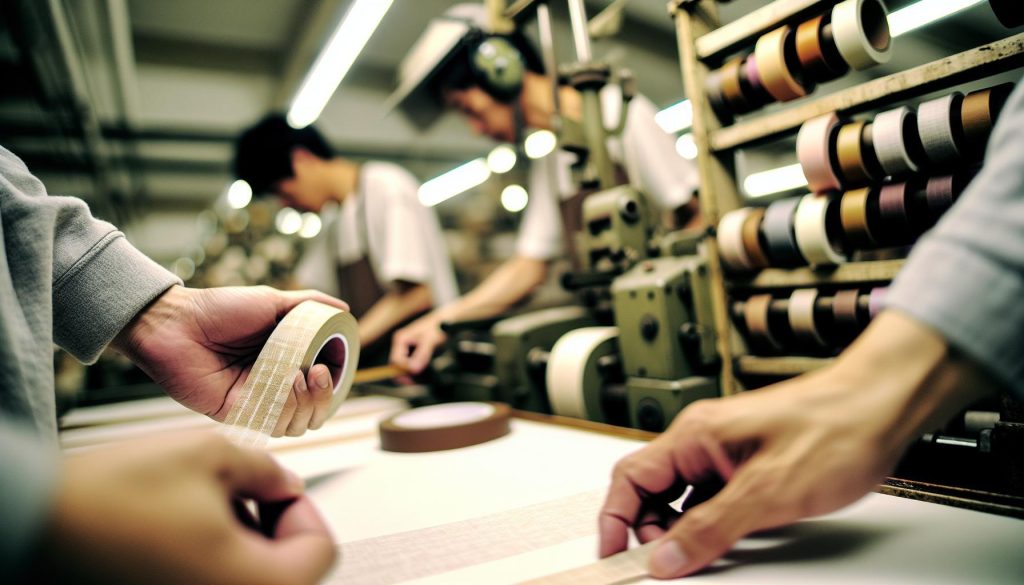
Discover how washi tape is made, from factory to your craft room! Uncover the secrets behind this beloved craft essential and elevate your projects today!
How to Produce Washi Tape: Start Your Manufacturing

Unlock your creativity! Learn how to produce washi tape with our step-by-step guide. Discover the secrets to start your manufacturing journey today!
Where Were Chuck Taylors Invented: Their Birthplace Revealed

Uncover where Chuck Taylors were invented and the story behind their iconic style. Discover the birthplace of these legendary sneakers today!
Who Manufactures Chuck Taylors: Inside the Production Line

Discover who manufactures Chuck Taylors and uncover the secrets behind their iconic production line. Don’t miss out on this exclusive insight into a beloved classic!
How Is Washi Tape Made? Inside the Manufacturing Process

Discover how is washi tape made! Uncover the fascinating manufacturing process behind this versatile craft essential. Your creativity awaits-let’s dive in!
What Are Chuck Taylors Made Of: Materials Breakdown

Discover what Chuck Taylors are made of! Get an inside look at the materials breakdown and learn why these iconic sneakers are a must-have.
Where Are Chuck Taylors Made: Inside the Manufacturing Process

Discover where Chuck Taylors are made! Dive into the fascinating manufacturing process behind your favorite sneakers and uncover what makes them iconic.
How Are Chuck Taylors Made: Behind the Scenes Manufacturing

Discover how Chuck Taylors are made! Uncover the secrets behind their iconic design and craftsmanship. Get the inside scoop on their manufacturing process today!
Foundational Pillars (Start Here)
Where Were Chuck Taylors Invented: Their Birthplace Revealed
The origin story of Converse Rubber Shoe Company founded by Marquis Mills Converse in 1908 in Malden, Massachusetts.
Who Manufactures Chuck Taylors: Inside the Production Line
The ownership timeline spanning independent American factories to the 2003 Nike acquisition and modernized global manufacturing.
What Are Chuck Taylors Made Of: Materials Breakdown
Forensic breakdown of raw inputs: heavy cotton duck, unvulcanized natural and synthetic rubber calendered sheets, nickel eyelets, and spun polyester laces.
How Are Chuck Taylors Made: Behind the Scenes Manufacturing
Step-by-step factory process: cutting canvas panels, stitching upper seams, applying foxing tape, and autoclave steam vulcanization.
Industrial Production: Steam Autoclaves, Calendering & Global Sourcing
The manufacturing sequence of a vulcanized shoe remains surprisingly hands-on compared to injection-molded athletic trainers. Sheet rubber is calendered into exact thicknesses, cut into diamond outsole blanks, and wrapped by hand with side foxing tape and toe caps around a mechanical shoe last. The assembled shoe enters a pressurized autoclave oven heated to 300°F (150°C), where sulfur cross-links the rubber polymer chains, transforming soft raw gum into hardened, elastic vulcanized rubber.
Global manufacturing relocated from American facilities in Lumberton, North Carolina, to advanced facilities across Vietnam, Indonesia, and India in the early 2000s. Understanding manufacturing specifications helps collectors distinguish authentic production run batches, identify factory manufacturing codes stamped on tongue labels, and evaluate seasonal canvas density standards.
| Manufacturing Stage | Core Material / Process | Machinery Utilized | Key Quality Benchmark |
|---|---|---|---|
| Canvas Cutting & Prep | 12oz - 14oz cotton duck cloth | Automated die-clicker presses | Zero fraying along panel edges |
| Upper Assembly | Heavy industrial stitching & eyelets | Double-needle industrial sewing machines | Uniform stitch tension & nickel eyelet crimping |
| Lasting & Foxing Wrap | Calendered raw rubber foxing tape | Hand assembly on aluminium shoe lasts | Seamless perimeter wrap without air gaps |
| Vulcanization Autoclave | Sulfur heat chemical cross-linking | High-pressure steam curing ovens | Irreversible bond between rubber sole and canvas |
Curated Topic Directory & Methodologies
Footwear Manufacturing & Heritage
Frequently Asked Questions
Are any Converse Chuck Taylors still made in the USA?
Standard Converse production ended in the USA in 2001 when facilities closed. Today, standard pairs are manufactured in Vietnam, Indonesia, and China. Occasional limited-edition artisan collaborations are produced in boutique American workshops.
Why does the bottom of Chuck Taylor soles have fuzzy felt fabric?
Converse coats roughly 50% of the outsole with a thin layer of flocked textile fiber. In US import tariff law, shoes classified as having textile outsoles incur a significantly lower import duty tariff (approx 3% vs up to 37.5% for rubber). The felt wears off naturally after a few days of outdoor walking.
What is the difference between vulcanized shoes and cold-cement shoes?
Cold-cement shoes attach pre-molded rubber soles to uppers using liquid glues and pressure clamps. Vulcanized shoes bond raw rubber to canvas using high-heat steam ovens, creating superior flexibility and board feel with zero glue lines.
How can you verify manufacturing origin on a pair of Chucks?
Check the underside of the tongue label. Authentic pairs display the manufacturing country (e.g., 'MADE IN VIETNAM' or 'FABRIQUE EN INDONESIE'), factory code, production date code, and unique UPC serial number.