
Have you ever admired beautiful handwriting and wished you could create it yourself? Calligraphy with a ballpoint pen offers an accessible gateway to this elegant art form. With just a pen you likely have at hand, you can transform everyday notes into stunning pieces of visual art. This guide will show you how to blend technique and creativity, helping you make each letter a unique expression of your personality. Whether you’re looking to enhance your invitations, personal letters, or simply want to capture a little beauty in your daily life, learning to write calligraphy can be both rewarding and fun. Let’s dive in and discover how to unleash your inner artist!
To write calligraphy with a ballpoint pen, draft standard cursive script with light, steady baseline letters, identify every downward stroke, draw a parallel secondary contour line to widen those sections, and fill in the interior gap with smooth, opaque ballpoint ink shading.
Choosing the Right Ballpoint Pen for Calligraphy
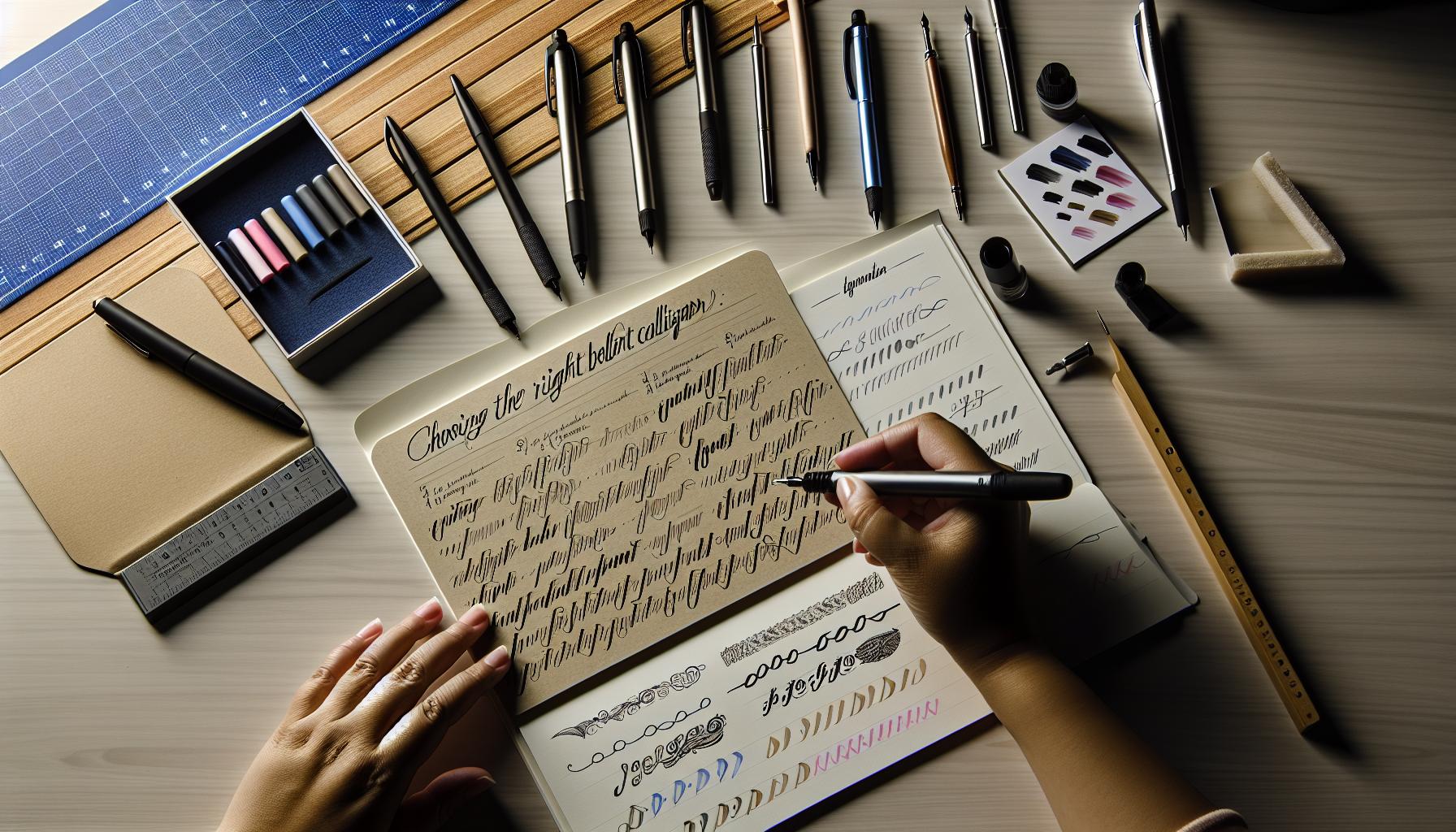
Choosing a ballpoint pen for calligraphy isn’t just about picking any pen off the shelf-it’s about finding one that enhances your art. Not every ballpoint is created equal; the right pen can make a world of difference in your technique and final outcome. You’ll want to consider several factors like the pen’s grip, ink flow, and nib size.
Begin by looking for a pen that feels comfortable in your hand. A good grip helps you maintain control and finesse while you create. Additionally, the ink flow is crucial-too thick, and it’ll smudge; too thin, and it might skip. For calligraphy, a medium tip (around 0.7mm to 1.0mm) is often recommended. This size allows for bold strokes without sacrificing the delicate details that define your lettering style. Brands like Uni-ball and Pilot often have excellent options tailored for artists.
Don’t forget to test out different styles! Some pens come with smooth, gel-like ink that glides across the paper, while others might use traditional oil-based ink that offers a different feel. Experimenting with several pens will help you determine what suits your technique best, allowing you to explore various effects and styles that can make your work stand out. Ultimately, choosing the right ballpoint pen is about finding what resonates with you and enhances your everyday artistry in calligraphy.
Essential Calligraphy Techniques with a Ballpoint Pen
To truly master calligraphy with a ballpoint pen, you need to embrace a blend of technique and creativity. The beauty of using a ballpoint lies in the versatility it offers. Unlike traditional calligraphy pens, a ballpoint can glide smoothly across various paper types, allowing you to experiment without fear of smudging or running out of ink mid-stroke. Here are some essential techniques to elevate your calligraphy skills.
First, mastering your grip is crucial. Hold the pen lightly, allowing it to rest comfortably between your fingers. This relaxed grip fosters fluid movement, essential for the graceful strokes that define calligraphy. Practice the basic strokes-upstrokes should be lighter and thinner, while downstrokes require more pressure to create a bolder line. These variations in pressure not only enhance the visual appeal of your letters but also build muscle memory.
Next, focus on your posture and the angle of your pen. Maintain a straight posture to eliminate unnecessary tension. A slight tilt of the pen-about 45 degrees-will help you achieve the best ink flow and line variation. As you practice, keep your wrist loose to allow for more natural movement. Start with simple alphabets and push your boundaries by incorporating embellishments and flourishes.
Lastly, don’t shy away from using guides. Grid paper can be your best friend while you’re learning. It helps maintain consistent letter size and spacing. Over time, challenge yourself to practice without guides, which will boost your confidence and creativity. Always remember, calligraphy is an art form-infuse it with your personality and enjoy the journey of creating beautiful written pieces.
Setting Up Your Workspace for Calligraphy Success
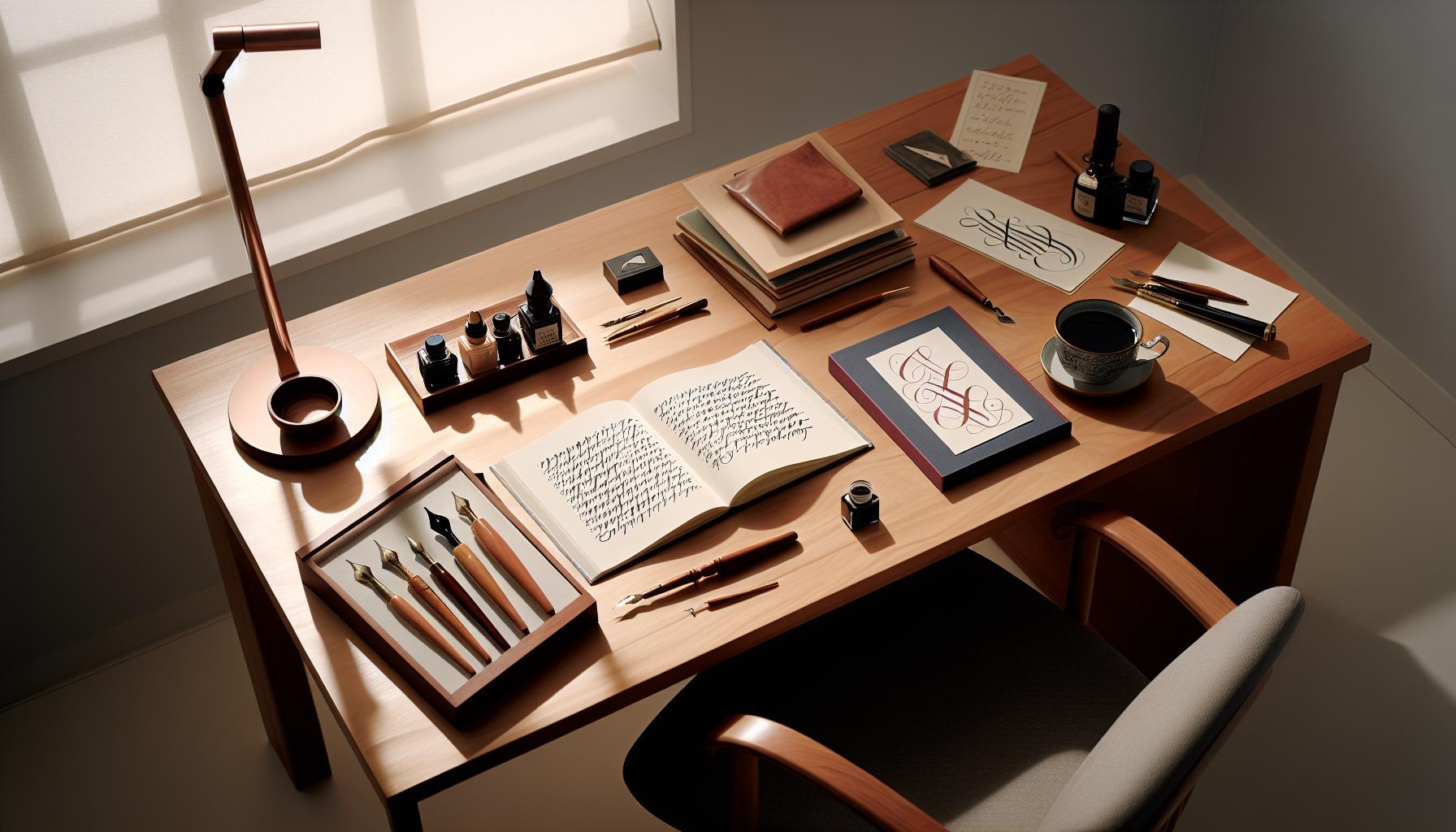
Creating the perfect workspace for your ballpoint pen calligraphy can transform your practice from mere writing into a joyful, artistic experience. No matter your skill level, a thoughtfully arranged area can greatly enhance your focus and creativity, making it easier to achieve those beautiful letterforms. Start by choosing a clean, well-lit space where you feel comfortable and inspired. Natural light is a big plus, as it minimizes eye strain and helps you see your work clearly.
Next, arrange your materials. A sturdy desk or table is essential, as it provides the right surface for control while you’re writing. Keep your preferred ballpoint pens within reach, and consider having a variety of colors and tip sizes to experiment with different styles and effects. A smooth, high-quality paper is just as crucial-it allows your pen to glide effortlessly, making your strokes cleaner and more fluid. Here’s a simple checklist to keep in mind:
- Good Lighting: Natural is best, but a bright desk lamp works, too.
- Comfortable Chair: Make sure you can sit for a while without discomfort.
- Organized Supplies: Keep pens, papers, rulers, and guides neatly arranged.
- Minimal Distractions: Quiet environments help your creativity flow.
Once your physical space is set up, think about your mental space. Take a moment before you start to clear your mind and focus on your intentions for your writing session. You might even create a calming atmosphere with soft music or by lighting a candle. This connection between your surroundings and mindset can make a significant difference in your calligraphy practice, encouraging you to flow into your artistry with ease and confidence.
Lastly, don’t hesitate to personalize your workspace. Whether it’s displaying completed calligraphy projects for motivation or surrounding yourself with inspiring quotes, little touches can make your practice feel more special and uniquely yours. Creating the right environment gives you a solid foundation, allowing your creativity to flourish and your skills to develop with every stroke.
Mastering the Basic Strokes in Ballpoint Calligraphy
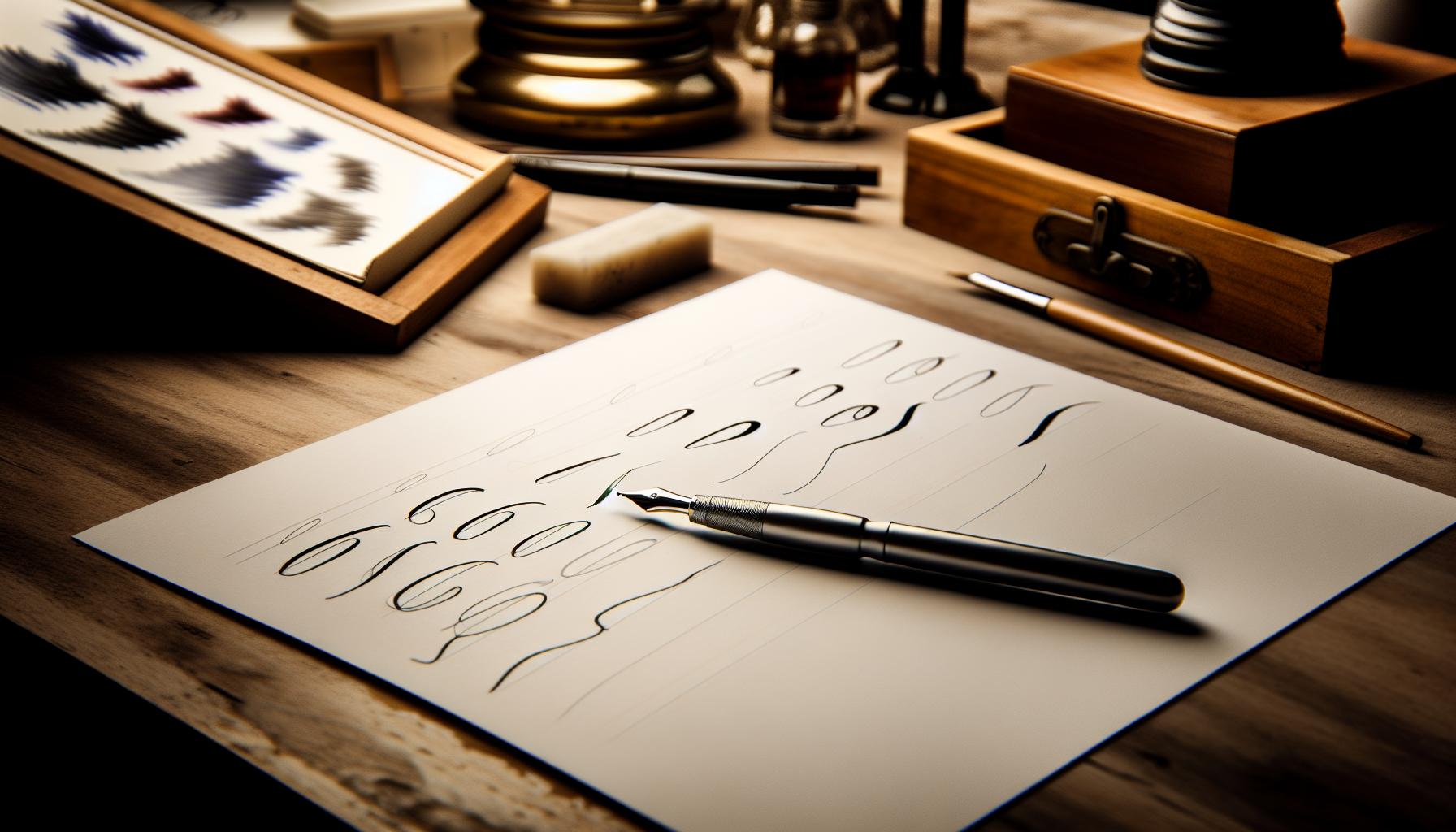
To truly excel at ballpoint calligraphy, you need to master the foundational strokes that form the building blocks of beautiful writing. These strokes are crucial, as they determine the overall character and style of your script. Understanding how to create these basic strokes will not only enhance your technique but also build your confidence as you progress into more complex letterforms.
Let’s start with the fundamental strokes you should focus on. Each stroke plays a distinct role and learning to execute them consistently will elevate your calligraphy game. Here’s a breakdown:
- Upstrokes: These are light, quick strokes made while pulling the pen upwards. They should be thinner as the pressure is minimal.
- Downstrokes: In contrast, downstrokes are made by pushing the pen down with more pressure, resulting in thicker lines. This contrast creates visual interest.
- Overturns: These combine upstrokes and downstrokes into a smooth arc. Start low, create an upstroke, and then transition into a downward stroke.
- Underturns: The opposite of overturns, these begin downward before transitioning into an upward stroke. Practicing both helps in creating fluidity in your writing.
- Ovals: They are essential for forming letters like “o” and “a.” Practice making consistent oval shapes to improve your overall letter rounding.
As you practice these strokes, focus on maintaining a relaxed grip on your ballpoint pen. A tense hold can lead to shaky lines and uneven pressure, negatively impacting your work. Try to practice each stroke repeatedly on scrap paper until you feel comfortable with the movements. You can also keep a notebook where you track your progress, noting improvements and areas that need more attention.
Consistency is key. Aim for uniformity in stroke thickness and shape. This can take time, but as you continue to practice, you’ll develop muscle memory. You can even watch short tutorials or join a calligraphy group to expand your learning and gain feedback. The journey might be challenging, but the satisfaction of mastering these strokes will significantly enhance your skills and the beauty of your calligraphy.
Creating Beautiful Letterforms: A Step-by-Step Guide
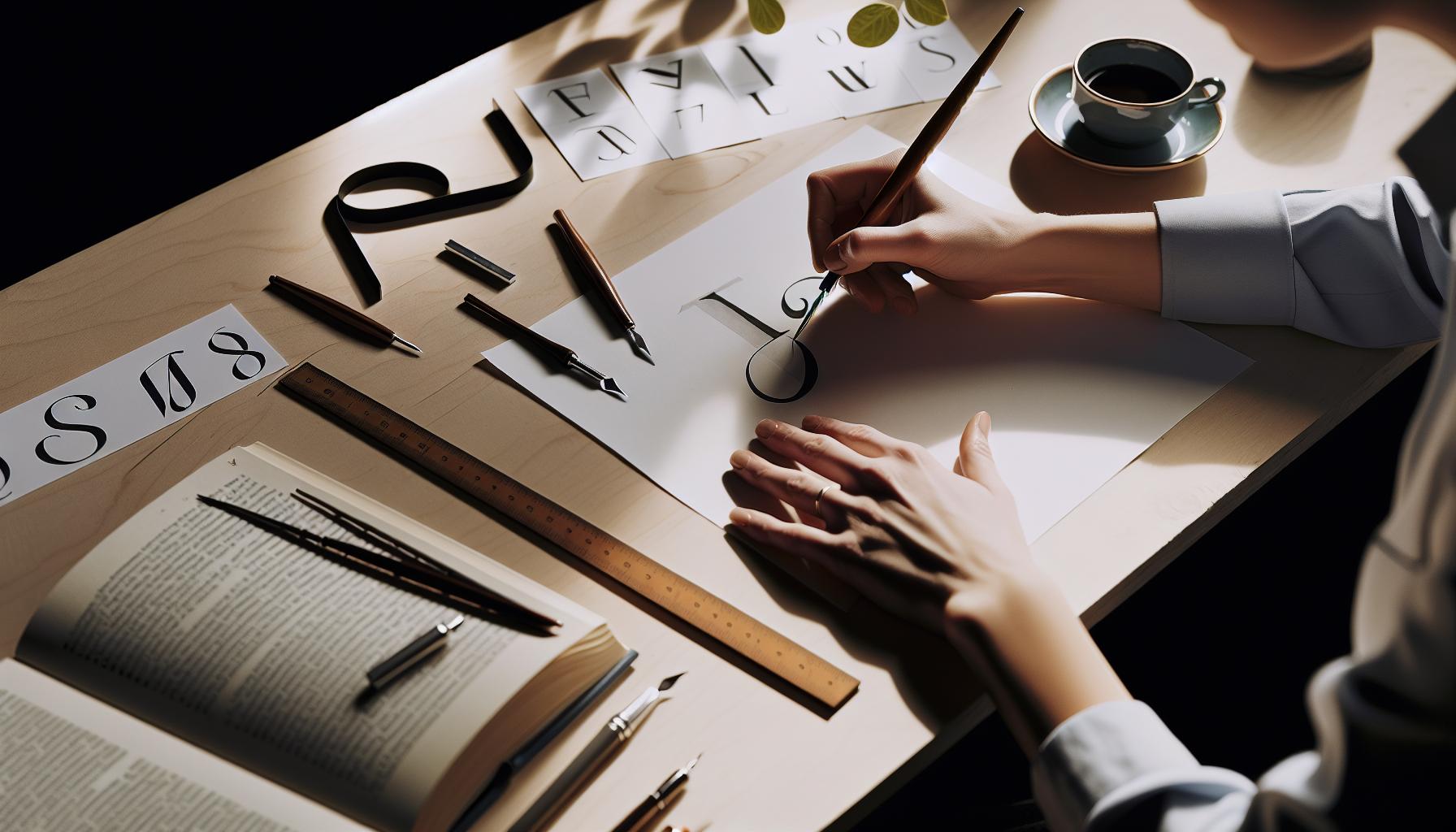
To create stunning letterforms in ballpoint calligraphy, you need to blend creativity with technique. Each letter is a canvas that allows you to showcase your personal style, so having a step-by-step approach can help you master this art form. Start with the basics of each letter, utilizing the strokes you’ve practiced. Visualize how each letter interacts with the next; this connection is essential for smooth writing.
Begin by sketching the outline of your letters lightly with your ballpoint pen. This ensures that you can make adjustments before committing to the finished stroke. Pay attention to the height, width, and slant of each letter, as these attributes contribute to the overall aesthetics of your writing. For instance, uppercase letters generally have more pronounced features, so focus on making those strokes bold and pronounced, while lowercase letters can be a bit more whimsical and flowing.
Practice with Purpose
Don’t hesitate to reference examples. Have a guidebook or digital images nearby to emulate styles. Practice each letter individually before stringing them together; this helps solidify your understanding of the form. When you join letters, remember to maintain similar pressure on your pen to achieve consistency in line weight. This is where your understanding of upstrokes and downstrokes comes into play-varying the pressure creates visual dynamics that enrich each letter.
Adding Your Personal Touch
Once you have the basic forms down, think about how you can personalize them. Maybe you incorporate a slight flourish to the tail of the ‘y’ or slightly broaden the bar of the ‘t.’ The key is to experiment! Use different colors in your pen to create contrast, or add embellishments like small dots or swirls around your letters. This adds character to your piece and makes your calligraphy distinctly yours.
In conclusion, creating beautiful letterforms in ballpoint calligraphy combines technique, practice, and personal flair. Embrace the process, be patient with yourself, and remember that artistry flourishes with experimentation. With enough dedication, you’ll craft letterforms that not only stand out but also convey your unique voice on the page.
Color and Style: Personalizing Your Ballpoint Calligraphy
When it comes to ballpoint calligraphy, color isn’t just an afterthought; it’s a game-changer. The right palette can elevate your work, adding not only aesthetic value but also a distinct personal touch. Experimenting with colors is where you can truly showcase your individuality and creativity. Start by selecting a color scheme that resonates with you. Maybe you prefer the bold elegance of a monochromatic look, or perhaps the cheerful contrast of vibrant hues catches your eye. Whatever you choose, let it reflect your personality.
Using various colors in your ballpoint calligraphy can help you emphasize different parts of your writing. For instance, you might opt for a striking color for headers or important phrases while using a softer shade for body text. This layering effect creates visual interest and can guide your reader’s attention exactly where you want it. Don’t be afraid to mix colors either! Bold oranges can create a lively contrast with deep blues or greens, giving your lettering a dynamic flair.
Playing with Styles and Techniques
In addition to color, consider integrating different styles into your work. Ballpoint pens offer versatility; try out varying line thicknesses or dabbling in a mix of script and print lettering. Each technique can bring out different aspects of your personality. For instance, angular serif letters paired with flowing cursive can create an eye-catching juxtaposition.
Lastly, don’t shy away from adding personal details. Consider embellishments like small decorative elements or creative borders to frame your work. Adding subtle details, such as tiny dots or patterns around your lettering, can make your calligraphy distinct. The goal is to make your piece not just a representation of your skill but also a window into who you are as an artist. Your ballpoint calligraphy should not only be about the letters you form but the story you tell through color and style. The more you express yourself, the more your artistry will thrive.
Common Mistakes to Avoid When Writing Calligraphy
When it comes to honing your ballpoint calligraphy skills, avoiding common mistakes can make all the difference between frustration and fluidity. One of the biggest pitfalls is rushing through your strokes. The beauty of calligraphy lies in its deliberate pace; each letter takes time to form. If you hurry, your letters may become shaky or uneven. Practice slow, steady movements, allowing yourself to fully form each character. Remember, it’s about the journey of creating art, not just finishing it quickly.
Another frequent misstep is neglecting the importance of proper grip and posture. Gripping your pen too tightly can lead to tension in your hand and wrist, resulting in fatigue and less control. Instead, hold your pen lightly, as if you’re gently balancing a feather. Your posture also matters; sit with your back straight and your feet flat on the floor to ensure a stable foundation. This not only enhances comfort but also improves your precision when forming intricate letterforms.
Additionally, many budding calligraphers overlook the significance of practicing basic strokes. Before diving into elaborate designs, take time to master fundamental strokes such as upstrokes, downstrokes, and curves. These are the building blocks of beautiful lettering. Set aside time in your practice sessions to focus solely on these techniques. With each stroke, you’ll build muscle memory that will translate into more confident, fluid writing.
Lastly, be cautious of not experimenting enough. While it’s tempting to stick to what you know, allowing yourself to try new styles, colors, and techniques can elevate your work dramatically. Don’t be afraid to blend styles or incorporate flourishes. Each experiment teaches you something new and pushes your creativity. Embrace the learning process, and you’ll be surprised at how quickly you improve.
Remember, the path to mastering ballpoint calligraphy is filled with practice, patience, and a willingness to learn from your mistakes. By recognizing these common pitfalls and addressing them, you can enhance your skills and enjoy the artistry of your lettering journey.
Incorporating Calligraphy into Everyday Projects
You might not think of calligraphy as a daily activity, but incorporating it into your everyday projects can transform ordinary tasks into creative expressions. Whether you’re crafting handmade cards for a friend or addressing envelopes for a special occasion, using a ballpoint pen brings both elegance and accessibility to your designs. One of the best parts? You don’t need a suite of expensive tools to achieve stunning results-just your trusty pen and a little bit of imagination.
Transforming Everyday Items
Simple items like notebooks, calendars, or even grocery lists can become beautiful pieces of art with a sprinkle of calligraphy. Try starting each month with a handwritten title, adding a personal flair to reminders and schedules. You can also embellish your grocery list by writing it in a charming script; it not only makes shopping more enjoyable but also helps you practice your lettering skills. Consider doing the same for meal prep; label jars or containers with elegant scripts to bring a touch of class to your kitchen.
Creating Personalized Gifts
Nothing says “I care” like a handwritten gift tag or card. Use your ballpoint pen to craft thoughtful notes, personalizing them with unique calligraphic styles. Imagine a beautifully written birthday message nestled in a gift bag or a heartfelt thank-you note that doubles as a keepsake. You can even create custom bookmarks or inspiring quotes to give as small tokens of appreciation. These personal touches make any gift feel extra special.
Hosting Events with Style
If you’re planning an event, consider elevating your decor with calligraphy. From invitations to place cards, incorporating your handwriting can tie your theme together beautifully. Using your ballpoint pen to create elegant headers or personalized seating arrangements not only adds a bespoke look but also showcases your creativity. Surprise guests with hand-lettered menus or signage that directs them-these details turn your event into an unforgettable experience.
By integrating calligraphy into your daily life, you not only hone your own skills but also inspire others to appreciate the beauty of handwritten art. So, grab that ballpoint pen and start transforming the mundane into the magnificent!
Taking Your Skills Further: Advanced Calligraphy Techniques
There’s a world of creativity waiting just beyond the basics of calligraphy, particularly when wielding a ballpoint pen. As you become comfortable with fundamental techniques, stretching your skills can open doors to new styles and personal expression. Advanced calligraphy isn’t merely about mastering letters-it’s about bending and breaking rules to reflect your unique voice.
Start by experimenting with contrast. Varying the pressure on your pen can create dramatic, eye-catching effects. With a bit of practice, you can alternate between thick downstrokes and thin upstrokes, adding depth and richness to your lettering. Try creating a set of letters using this technique, observing how the thickness changes your writing’s dynamic. You can also practice creating connections between letters that mirror how handwriting flows naturally, giving your work a seamless quality.
Another key aspect is the addition of decorative elements. Flourishes and embellishments allow you to turn simple words into intricate designs. Begin with basic curls and loops, then branch into more detailed additions like leaves or swirls. This not only adds flair but also enhances your personal style. Creating a portfolio of your designs, complete with these flourishes, can serve as inspiration for future projects.
Incorporating color is a fantastic way to elevate your calligraphy. While working with a ballpoint pen generally confines you to standard ink colors, don’t shy away from mixing and matching. Consider using gel pens in combination with your ballpoint for added vibrancy; simply switch up the style for highlights or key phrases within your text.
Additionally, practice layering techniques to build up fascination. Use lighter ink for a shadow effect behind solid letters, or create a gradient by applying more pressure to the pen in certain areas. These efforts can transform flat writing into engaging art pieces that demand attention.
Lastly, don’t underestimate the power of feedback. Join online communities or calligraphy groups where you can share your work and get constructive criticism. Real-world interactions can yield insights you might never discover alone. Embracing these advanced techniques not only enhances your calligraphy skills but also invites a deeper connection to your craft, making every stroke a statement of your creativity.
Caring for Your Ballpoint Pen: Tips and Tricks
Caring for your ballpoint pen is crucial for maintaining its performance and ensuring longevity. A well-kept pen can deliver smooth lines and vibrant ink for your calligraphy projects, elevating your work to the next level. One of the first habits to adopt is proper storage. Avoid leaving your pen in direct sunlight or in overly hot or cold environments; the heat can dry out ink or warp the plastic components. Instead, keep your pen in a cool, dry place, ideally in a case or holder to prevent it from rolling around and potentially getting damaged.
Regularly clean your pen, especially if it’s been sitting unused for a while. Sometimes, ink might clog the point, resulting in skips or erratic lines. To clean it, gently wipe the tip with a soft cloth or paper towel to remove any dried residue. If your pen has a removable ink cartridge, consider rinsing the nib with warm water (just the nib and not the barrel) to eliminate any built-up ink. Let it air dry completely before reassembling it for use again.
Also, be mindful of how you’re applying pressure while you write. Overly aggressive pressure can result in faster wear on your pen’s tip, leading to uneven ink flow. Practice a gentle grip and let the pen do the work; you’ll find that it can glide smoothly across the page, allowing for more control and better results in your calligraphy.
Lastly, keep an eye on the ink level. If you notice it running low, it’s often better to replace the cartridge sooner rather than later. This ensures you won’t be caught mid-project with an empty pen, which can lead to frustration and interrupt your creative flow. Always have a spare cartridge on hand so you can switch it out and continue working without a hitch.
Inspiration: Where to Find Ideas for Your Calligraphy Projects
Finding inspiration for your calligraphy projects can be both exciting and daunting. The beauty of ballpoint pen calligraphy lies in its accessibility and versatility, making it a fantastic medium to express your creativity. One great way to spark your imagination is to draw from your surroundings. Pay attention to everyday objects-books, packaging, even street signs-and observe how typefaces and calligraphic styles can inspire your own designs. You can capture phrases or quotes that resonate with you, leading to completely unique pieces.
Another avenue worth exploring is social media platforms. Instagram and Pinterest are treasure troves of calligraphic art, where artists share their work and techniques. Follow hashtags like #BallpointCalligraphy or #CalligraphyArt to see a variety of styles and ideas. Don’t hesitate to save or pin pieces that catch your eye. A simple image can challenge you to replicate or adapt the style into your own projects. Additionally, consider engaging with the community-questions and discussions can lead to innovative concepts or resources.
Furthermore, themed challenges can provide a structured way to push your creativity. Try monthly or weekly prompts that specify a theme, color palette, or word. For instance, you could focus on seasonal themes such as autumn leaves or holiday greetings. These challenges not only inspire you but also encourage a routine practice of your skills.
Lastly, keep a journal dedicated to your ideas. Jot down thoughts, sketches, or anything that sparks your creative juices. Over time, you’ll build a personal library of inspiration that reflects your unique style and preferences. This way, when you’re stuck, you have a go-to source to reignite your artistic spark. Remember, inspiration is all around-you just need to look for it!
Frequently Asked Questions
“`markdown
Q: Can I use any ballpoint pen for calligraphy?
A: Yes, you can use most ballpoint pens for calligraphy, but choosing a pen with a smooth flow and a comfortable grip will enhance your experience. Look for pens with finer tips for more control over letterforms. Experiment with different types to find the one that suits your style best.
Q: What are the best paper types for ballpoint pen calligraphy?
A: Smooth, bleed-resistant paper is ideal for ballpoint pen calligraphy. Papers designed for fountain pens often work well, helping to prevent ink smudging and allowing for clean lines. Consider using bristol or marker paper for the best results.
Q: How can I create texture in my ballpoint pen calligraphy?
A: To add texture to your ballpoint pen calligraphy, vary your pressure on the pen while writing. Lighter pressure creates thin lines, while heavier pressure produces thicker strokes. Experiment with hatching or stippling techniques for added depth and interest.
Q: What are some common mistakes to avoid when starting ballpoint pen calligraphy?
A: Beginners often rush their movements or apply inconsistent pressure, leading to uneven lines. Take your time, practice basic strokes, and maintain a steady hand. Refer to the “Common Mistakes to Avoid When Writing Calligraphy” section for more tips.
Q: How can I improve my ballpoint pen calligraphy skills quickly?
A: To improve quickly, practice regularly with structured exercises focusing on basic strokes and letterforms. Join online challenges or follow tutorials to keep your motivation high. Set aside dedicated time each week to refine your technique and experiment with styles.
Q: Where can I find inspiration for ballpoint pen calligraphy projects?
A: Inspiration can be found in various places, such as social media platforms like Instagram and Pinterest, where many artists share their work. Additionally, explore books on lettering and follow calligraphy blogs. Check out the “Inspiration: Where to Find Ideas for Your Calligraphy Projects” section for more resources.
Q: Are there online communities for ballpoint pen calligraphy enthusiasts?
A: Yes, online platforms like Facebook and Reddit have active communities where calligraphy enthusiasts share tips, projects, and feedback. Engaging with these communities can provide support and inspire your creativity. Join a group that matches your skill level to connect with others.
Q: How do I maintain my ballpoint pen for optimal performance in calligraphy?
A: To keep your ballpoint pen in good condition, store it capped when not in use, and avoid exposing it to extreme temperatures. Regularly clean the tip with a soft cloth to remove any dried ink. Refer to “Caring for Your Ballpoint Pen: Tips and Tricks” for more detailed maintenance tips.
“`
The Conclusion
Now that you’ve mastered the art of calligraphy with just a ballpoint pen, it’s time to put your new skills to the test! Remember, practice is your best friend, so don’t hesitate to experiment with different styles and layouts in your daily writing. If you’re eager to learn more, check out our guides on creating gorgeous fonts for your projects and tips for enhancing your calligraphy skills further.
We’d love to hear about your journey-share your thoughts and your creations in the comments! For even more inspiration, sign up for our newsletter and stay updated on the latest tips, techniques, and resources that can elevate your artistry. Keep writing, keep exploring, and let your creativity flow!
Calligraphy with Ballpoint Pen (Faux Calligraphy & Pressure Shading)
Practicing calligraphy with ballpoint pen tools is one of the most accessible and versatile ways to develop muscle memory, letter spacing, and cursive rhythm without investing in expensive specialty inks or fountain pens. Using the proven “faux calligraphy” framework, any standard everyday office pen can produce striking, elegant artwork:
| Technique Step | Ballpoint Execution | Visual Result |
|---|---|---|
| 1. Skeleton Script | Write cursive letters using consistent light pressure and wide spacing | Delicate, monoline hairline foundation |
| 2. Downstroke Isolation | Trace every segment where the pen travels downward toward your body | Identifies zones requiring structural weight |
| 3. Contour Expansion | Draw a secondary parallel line on the inner curve of each downstroke | Creates a hollow chamber matching flex-nib line widths |
| 4. Solid Infill | Shade the interior hollow using circular crosshatching strokes | Rich, opaque contrast simulating professional calligraphy |
Three Pro Tips for Flawless Ballpoint Lettering
- Use a 1.6mm Bold Point: Ultra-fine 0.5mm pens leave scratchy white gaps. Using a 1.2mm or 1.6mm bold ballpoint pen (such as a Bic Cristal Bold) provides buttery oil ink flow and seamless infill shading.
- Cushion Your Writing Surface: Place 3 to 4 sheets of scrap paper underneath your working page. A cushioned substrate allows the ball bearing to glide smoothly without denting the paper fibers.
- Clean the Tip Regularly: Ballpoint ink naturally accumulates in a small pasty glob on the side of the socket. Wipe the pen tip on scrap paper every 2 minutes to prevent unsightly ink smudges.
Frequently Asked Questions About Ballpoint Pen Calligraphy
Can you do real calligraphy with a ballpoint pen?
Yes, through ‘faux calligraphy’. You write standard cursive or modern script, then manually double-line and shade every downward stroke to mimic the thick-and-thin contrast produced by traditional flexible nibs.
What is the best paper for ballpoint calligraphy?
Smooth, medium-weight cardstock (around 120–160 gsm) or Rhodia paper works best because it withstands pressure without bleeding through or curling.
Get our latest guides, news, and insights highlighted in your Google Search & AI Overviews.