

Changing ink colors in calligraphy can completely transform your artwork, allowing you to express your creativity in vibrant new ways. Whether you’re a seasoned calligrapher or just starting out, knowing how to switch inks seamlessly is essential. After all, an unexpected color shift can inspire fresh designs or motifs you never considered before.
But if you’ve ever faced the frustration of ink buildup or muddy transitions between colors, you know how daunting it can be to make that change. Don’t worry-by following some simple techniques, you can easily switch between shades and maintain the integrity of your pen and your work. In this guide, we’ll explore straightforward strategies and tips to make your ink transitions smooth and successful. Let’s dive in and unlock the possibilities that come with a colorful calligraphy palette!
Understanding Calligraphy Pen Ink Types and Colors
Choosing the right ink type for your calligraphy can elevate your writing experience and the visual impact of your work. Not all inks are created equal; they vary in composition, flow, and color. Understanding the distinct types available will help you make informed choices as you experiment with different styles and techniques.
When it comes to calligraphy, inks generally fall into a few categories: dye-based, pigment-based, and iron gall. Dye-based inks are vibrant and flow easily, making them ideal for beginner calligraphers who enjoy experimenting with color. However, they can fade over time and are less water-resistant. On the other hand, pigment-based inks offer richer colors and greater longevity. They’re perfect if durability is essential for your projects, especially for pieces you want to display or sell. Iron gall ink, a historical favorite, is water-resistant and permanent but requires careful handling due to its acidity.
The range of colors in calligraphy inks is astonishing, from classic blacks and grays to vibrant reds, blues, and even metallics. Each color evokes different emotions and can set the tone for your piece. When selecting a color, consider the context of your work. For formal invites, you might stick to traditional shades, while bright, bold colors can add flair to personal projects. Brands like Tom’s Studio offer an array of hues from black to stunning metallics, ensuring you find the perfect match for your style[1].
Incorporating a mix of ink types and colors not only enhances the visual appeal of your calligraphy but also allows you to express your artistic vision. Don’t hesitate to experiment with different inks to see how they perform on various papers and under different conditions. Your exploration can lead to delightful surprises and refine your personal style.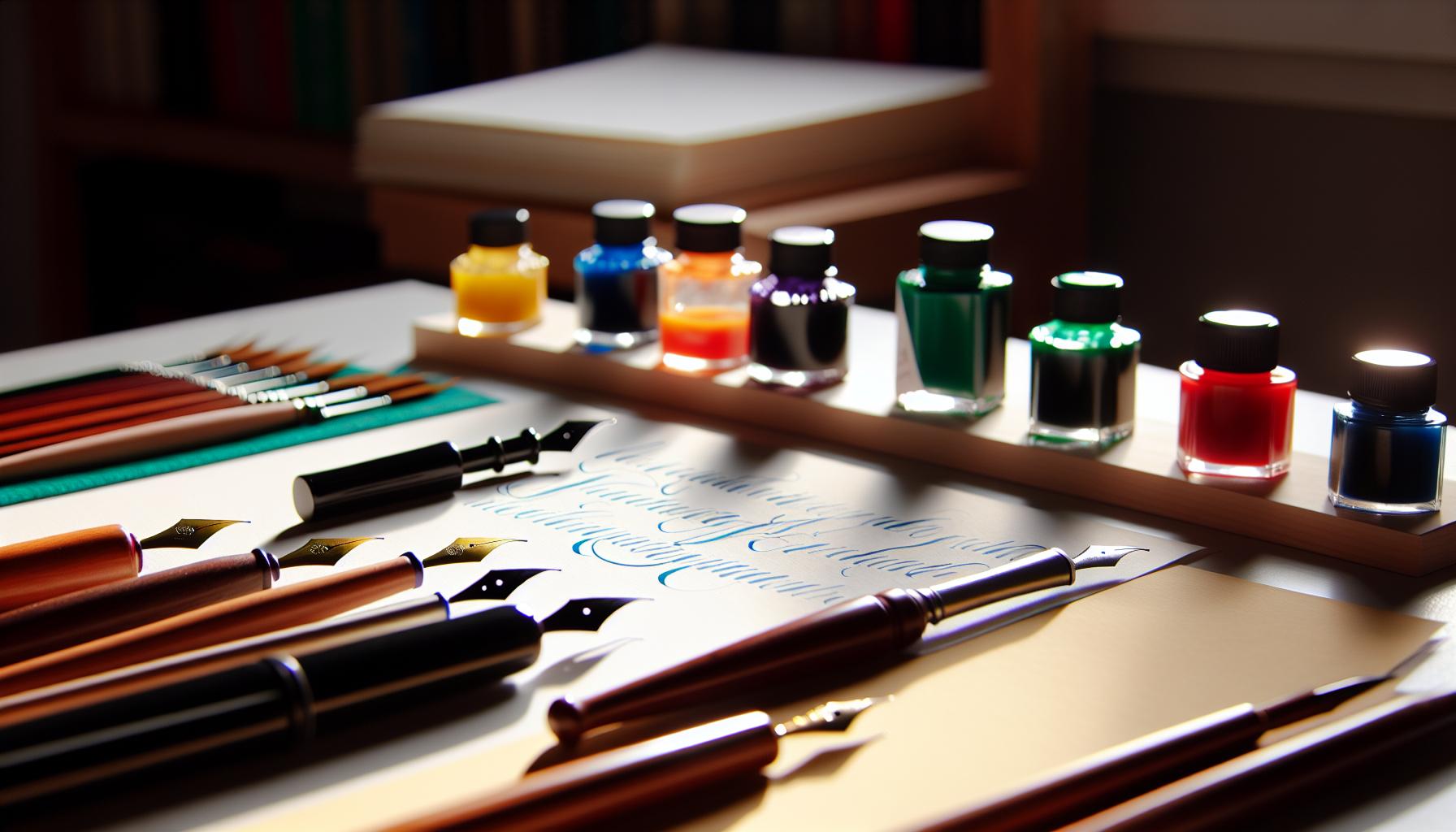
Essential Tools for Changing Calligraphy Ink
To switch colors in your calligraphy pen efficiently, having the right tools at your disposal can make all the difference. You’ll not only protect your investment but also enhance your creative process. Start with a reliable set of essentials that every calligrapher should have handy.
First and foremost, cleaning supplies are a must. A good quality cleaning solution or water can help you clear out any residual ink from the nib and feed. Make sure to include soft, lint-free cloths or paper towels to gently wipe the nib after soaking it in the cleaning solution. This ensures that leftover ink doesn’t mix with your new color, which could lead to unexpected results on your paper.
Another important tool is a pipette or dropper. This will allow you to transfer ink effortlessly from its bottle to your pen without a mess. Precision is key, and dropper applications let you control how much ink enters the pen. If you use a fountain pen, ensure you have a converter that suits your pen type, as it can significantly ease the switching process.
Lastly, keep a notebook dedicated to ink swatches. Create a visual reference for the different colors and types of ink you’ve experimented with. This not only helps you remember which inks you liked best but also inspires future projects. Being organized and prepared sets the stage for a smooth ink transition every time you’re ready to create.
Having these tools at hand streamlines your process and enhances the joy of switching up your ink colors. Choose the right supplies that resonate with your style, and each ink change will feel like a breeze.
Step-by-Step Guide to Switching Ink Colors
Switching ink colors in your calligraphy pen can feel daunting if you’re not sure where to start, but it’s much easier than you might think. With a bit of planning and the right tools, you can achieve smooth transitions between colors for stunning results in your work. Here’s a step-by-step guide to help you switch colors seamlessly and keep your creativity flowing.
First, ensure your workspace is clean and organized. Have a soft cloth handy because as you switch inks, there’s likely to be some residue that needs cleaning. Start by removing the old ink cartridge or emptying the converter if you’re using one. If you’re working with a nib and ink bottle, clean your nib thoroughly with water or a dedicated cleaning solution. It’s vital to eliminate any traces of the old ink to prevent unintended color mixing.
Next, prepare your new ink. Whether it’s a cartridge or bottled ink, you want to be ready. For cartridges, simply insert the new one, making sure it’s seated correctly. If you’re using bottled ink, use a pipette or dropper to fill your converter or dip the nib into the ink. When filling, avoid overfilling to prevent blobbing, which can disrupt your writing flow.
After you’ve filled your pen, it’s essential to test it. Take a scrap piece of paper and write a few lines to check the flow and ensure the new color is coming through cleanly. If the ink isn’t flowing smoothly, give the nib a gentle wipe with your cloth and try again. Sometimes, you may need to pump the pen a little to get the ink moving.
Finally, organize your workspace for future changes. Keep a small notebook handy to jot down your ink colors and experiences with each. This way, you can easily see what works best for your projects and feel inspired for your next calligraphy piece. By following these steps, you’ll not only make switching colors easier but also enhance your overall calligraphy practice.
Tips for Maintaining Your Calligraphy Pens
To keep your calligraphy pens in peak condition, a few simple yet effective tips can make a world of difference. First and foremost, always clean your pens after each use, especially if you’re switching ink colors. Residue from old ink can clog nibs and disrupt the smooth flow of your new ink, leading to frustration during your writing sessions. An easy way to clean them is to rinse the nibs under running water and give them a gentle wipe with a soft cloth. If the nib has stubborn ink buildup, a bit of soapy water can help break it down, but make sure to rinse thoroughly afterward.
Another critical maintenance tip is to store your pens properly. If you’re using bottled inks, store your pens horizontally to prevent the ink from settling in one area, which could dry out the nib. If you have a favorite pen that you haven’t used in a while, consider dipping the nib in ink occasionally to keep it fresh and functional. When it comes to cartridges, make sure each one is properly seated; a poorly fitted cartridge can lead to leaking or inconsistent ink flow.
Lastly, consider jotting down notes about your inks and pens in a dedicated notebook. Note details like ink behavior, drying time, and even how the color performs on different papers. This practice can help you choose the right ink for future projects and maintain a consistent style in your work. A little attention goes a long way in preserving the life of your tools and enhancing your overall calligraphy experience.
Troubleshooting Common Ink Change Issues
When changing ink colors in your calligraphy pen, issues can arise that turn a simple task into a frustrating chore. Inconsistent ink flow, clogs, or unexpected reactions between old and new inks can derail your creative session. The good news? Most problems are easily resolvable with a few straightforward techniques.
First, always start by thoroughly cleaning your nib. Leftover ink residue from previous sessions can dry and create a barrier that prevents new ink from flowing. Rinse the nib under warm running water, and if needed, use a soft brush to gently scrub any stubborn bits. Additionally, ensure that the nib is perfectly seated in the holder; a misaligned nib can create leaks or inconsistent flow. If you’re transitioning from one brand of ink to another, especially if the inks have different viscosities, it’s crucial to flush the pen with water or a suitable cleaning solution to avoid clogging.
Another common issue is ink bleed or feathering on paper, often a result of switching from a thick, viscous ink to a thinner one. To mitigate this, I recommend testing your new ink on a similar paper type before diving into big projects. Depending on the ink’s formulation, adjusting your writing pressure can also help. If the ink is too thin, use less pressure to prevent it from seeping too deep into the fibers of your paper.
Lastly, monitor how the ink dries. Some inks take longer to set, which can lead to smudging if you’re not careful. Keep a few practice sheets handy for quick tests when changing ink colors so you can see how the new ink behaves without risking your main project. Remember, the key to successful ink changes lies not just in technique but in understanding how your new ink interacts with your existing tools and materials. Stay patient, adjust as needed, and your calligraphy will flourish with every beautiful stroke.
How to Clean Your Calligraphy Pen After Ink Switch
To keep your calligraphy pens in top shape after switching ink colors, a thorough cleaning routine is essential. Not only does this prevent cross-contamination of colors, but it also helps maintain optimal ink flow for your next creative session. Let’s dive into some straightforward steps you can follow to effectively clean your calligraphy pen.
Start by disassembling your pen. Remove the nib from the holder and any ink reservoir if applicable. Rinse the nib under warm running water. This simple step is surprisingly effective-most inks dissolve easily with just water. If you notice stubborn remnants of dried ink, grab a soft toothbrush or a gentle scrub pad. Lightly brush the nib and the ink channel, taking care not to apply too much pressure as you could damage the nib.
After rinsing, it’s time to ensure everything is completely free of residue. Soak the nib in a small dish of warm water for about 10-15 minutes, which can help loosen any remaining ink particles. For stubborn cases, you might consider using a specialized pen cleaner, like the Speedball Pen Cleaner, which can break down more resilient inks without harming the nib’s finish [[1]].
Once the nib is clean, dry it gently with a microfiber cloth or paper towel. Double-check that there are no water droplets left since moisture can dilute your new ink. Reassemble your pen, making sure it’s seated correctly to avoid any flow issues. And there you have it-your calligraphy pen is prepped for a new ink adventure! This attention to cleaning not only ensures vibrant colors in your artwork but also prolongs the life of your favorite tools.
Choosing the Right Ink for Your Calligraphy Style
isn’t just about picking a color; it’s about enhancing your unique flair and ensuring your writing flows beautifully. Different inks offer distinct benefits and characteristics, tailored to various techniques and outcomes. For example, if you’re just starting, sumi ink is a fantastic choice. Its smooth consistency and rich color make it forgiving for beginners, allowing for practice without the frustration of inconsistent flow.
When considering your ink option, think about the type of effects you want to achieve. If you’re aiming for something bold and vibrant, Bombay India Ink delivers a wide range of colorful options that pop on the page. For a more traditional approach, iron gall ink was historically favored for its deep, dark lines-perfect for elegant and formal scripts. Here’s a rundown to help you decide:
- Sumi Ink: Ideal for beginners; provides a rich, deep black and is easy to work with.
- Iron Gall Ink: Offers a vintage feel, great for classic styles but requires more care.
- Bombay India Ink: Perfect for vibrant calligraphy; choose from various bright colors.
- Walnut Ink: A natural option; gives a softer, earthy tone and is forgiving on paper.
- Ziller Soot Black: Excellent for watercolor techniques; it blends beautifully, offering versatility in your work.
Remember, the ink’s consistency and drying time also matter. If you’re working on intricate designs that require layering, you might prefer a fast-drying ink that prevents smudging. On the other hand, if you’re exploring blending techniques, an ink that remains wet longer could be beneficial.
Ultimately, your choice will depend on your artistic vision and the specific styles you want to explore. Don’t hesitate to experiment with different inks to find what resonates with your style. The right ink can transform your calligraphy from good to stunning, inviting further creativity and expression in your work.
Experimenting with Color Blending Techniques
Experimenting with color blending in calligraphy can truly elevate your artwork, creating stunning visuals that captivate and engage. Mixing different inks allows you to explore unique shades and textures that aren’t available off the shelf. One of the most exciting aspects of this craft is finding the perfect balance between colors to achieve the desired effect, whether it’s soft gradients or bold contrasts.
To get started, gather a few inks or paints that you love. Choose complementary colors to blend-a vivid blue with a soft green, for instance. Use a palette or mixing surface to combine small amounts of each ink. You can tweak the proportions until you find just the right tone. Remember, less is often more; add a drop at a time to avoid overwhelming the mix.
If you’re working with watercolors or gouaches, you can take advantage of their natural blending properties. A wet brush can be your best friend; add water to soften your colors and create shades. As you apply your blended ink, layer lightly, allowing each color to dry before adding more. This technique helps prevent muddiness and allows the unique qualities of each color to shine through.
Finally, don’t shy away from testing unconventional combinations. Mixing inks with different opacities can create intriguing effects, particularly when you layer or glaze one color over another. Keep a journal of your blends-note down the ratios and results. This will not only help you replicate successful mixes but also encourage you to push your boundaries as you develop your voice in calligraphy. Remember, experimentation is key, so have fun with it!
The Best Brands for Calligraphy Ink and Pens
When it comes to selecting calligraphy ink and pens, the choices can be overwhelming, but a few standout brands consistently deliver quality that every calligrapher should consider. Remember, the right tools can enhance your artistry and make switching ink colors a seamless experience.
One of the most reputable names in the market is Speedball. Known for its vibrant colors and smooth flow, Speedball’s calligraphy inks are perfect for both beginners and experienced artists. They offer an array of pigments that work well across various mediums, making them a versatile choice. You can easily transition between colors thanks to their quality formulation, which minimizes clogging and skipping during use [[1]].
For a more artistic flair, Tom’s Studio provides unique ink options like gold and silver alongside more traditional colors. Their custom ink-making kits allow you to experiment and create your own hues, perfect for anyone looking to personalize their calligraphy style. This kind of flexibility is invaluable when switching between colors; you can curate a palette that matches your artistic vision gRYLraMLuuTGjFLsKd_3s2LvRERO7z7SHRohT6J7″>[[3]].
Choosing the right brand is about finding the best fit for your needs and style. Whether you’re writing invitations, crafting art pieces, or showcasing calligraphy skills at exhibitions, having reliable ink and pens can make all the difference in your work’s appearance and flow. Don’t hesitate to try various brands to discover what suits your creative process best.
Long-term Care for Your Calligraphy Supplies
Long-term investment in your calligraphy supplies goes beyond just cleaning; it’s about nurturing your tools for future use. Pens are delicate instruments that thrive with proper handling and storage. Here are some key practices to ensure your calligraphy pens and inks remain in top shape.
First, always store your pens horizontally when possible. This prevents ink from settling at one end and avoids nib damage. For extra protection, consider investing in a dedicated case that provides compartments for different nibs and inks. This keeps everything organized and easily accessible.
Regular maintenance is crucial. After each use, clean your nibs thoroughly to remove leftover ink. A simple rinse under running water often does the trick, but let’s not forget that stubborn pigmentation can require a bit more effort. For deeper cleans, you can let the nib soak in water, changing it until it runs clear. This prevents clogging and preserves ink flow, especially vital when you switch colors frequently.
When it comes to ink storage, keep your bottles capped and upright to avoid spills and contamination. A cool, dark place is ideal for storage, as it helps preserve the vibrancy and viscosity of your inks. If you notice any separation in the ink, gently shake the bottle before use. This ensures you get an even flow and rich color every time you pick up your pen.
Finally, take time to test new inks before fully committing. Create swatches or small samples to see how they behave on different papers and with various nibs. This not only helps in choosing the right ink for a particular project but also prevents wastage of ink and resources. By taking care of your calligraphy supplies, you’ll enhance your practice and ensure that your pens and inks respond beautifully to your artistry for years to come.
Showcasing Your Work: Displaying Ink Color Changes
When it comes to showcasing your calligraphy work, the way you display your ink color changes can truly enhance the overall impact of your pieces. Imagine vibrant letters shimmering in different shades under varying light – it not only captivates the viewer but also invites them to appreciate the nuances of your craft. Whether you’re displaying finished pieces at a gallery, sharing on social media, or simply showcasing your artistry at home, there are several effective methods you can use to elevate your work.
Start by selecting the right background. A contrasting color can make your ink colors pop. For instance, if you’re using iridescent inks that shift as they dry, consider a matte black or deep jewel tone backdrop to highlight those subtle shifts. Moreover, lighting plays a crucial role; natural light can bring out the depth in your ink colors, whereas soft, diffused artificial lighting can create a warm ambiance that softens harsh contrasts.
When it comes to presentation, think creatively. Frame your calligraphy pieces using shadow boxes to create a 3D effect. This allows light to interact with the surface of the paper, giving viewers a dynamic perspective as they move around the piece. You might also consider using glass panes that protect while allowing the colors to shine vibrantly.
Additionally, group your pieces together in a creative display. Curate a collection where you can feature before-and-after shots of your work as the ink dries, or showcase a gradient effect by arranging pieces that shift from one color shade to another. Not only does this tell a visual story, but it also invites viewers to engage more deeply with your process.
Ultimately, the goal is to create a display that not only showcases your ink changes but also reflects your unique style as an artist. By thoughtfully considering your presentation, you can inspire others to appreciate the subtleties of calligraphy inks, making your art an interactive experience for everyone who sees it.
Frequently Asked Questions About Calligraphy Ink Usage
The world of calligraphy ink is rich and diverse, leading to many common questions about usage, maintenance, and best practices. Understanding these can greatly enhance your experience and results when working on your calligraphy projects.
One of the most frequently asked questions is about ink types. The choice between dye-based, pigment-based, and metallic inks can be overwhelming. Dye-based inks offer vibrant colors but might fade over time, while pigment-based inks provide longevity and better lightfastness. If you’re going for shimmer, metallic inks can add a breathtaking effect but often require different handling and drying times.
Another common query revolves around changing ink colors. It’s essential to thoroughly clean your pen between color switches, as leftover ink can blend with new colors, muddying your work. Use warm water for water-based inks, and consider a specialized pen cleaner for stubborn residues. This step ensures that your new ink flows smoothly and retains its true color.
Many artists also wonder about appropriate ink for specific styles. Some inks perform better on certain papers or with specific nibs. The right combination can significantly affect the quality of your work. Experimenting with a variety of inks-like the muted pastels from specialty brands or the rich, fade-resistant options available online-can help you discover what works best for your style.
Lastly, don’t neglect to ask about maintenance tips for your calligraphy pens. Regular cleaning after each session will prevent clogging and ensure a consistent flow. Additionally, storing pens upright with the nib facing up can help maintain integrity and readiness for your next use. By addressing these frequently asked questions, you can streamline your calligraphy practice and focus on what truly matters: your art!
Frequently Asked Questions
Q: How do I know when to change calligraphy pen ink?
A: Change your calligraphy pen ink when you notice a significant color fade, skipping while writing, or if the ink has thickened due to drying. Regularly checking the flow can prevent frustration during your writing sessions. For a detailed guide on switching colors, refer to our article on Step-by-Step Guide to Switching Ink Colors.
Q: Can I mix different types of calligraphy inks?
A: Mixing inks can be risky since different formulations may react unpredictably. However, if you’re working with similar types (like water-based), try small batches first. For mixing techniques, check our section on Experimenting with Color Blending Techniques for tips on achieving beautiful results.
Q: What should I do if my new ink is not flowing well?
A: If your new ink isn’t flowing, first ensure the nib is clean and free from any residue. Try adjusting the angle or pressure while writing. Refer to our Troubleshooting Common Ink Change Issues section for more comprehensive solutions.
Q: How can I prevent ink blending when switching colors?
A: To prevent ink blending, make sure your pen is thoroughly cleaned before switching. Use a different nib for each ink type if possible, and let the pen dry completely after cleaning. Check our section on How to Clean Your Calligraphy Pen After Ink Switch for best practices.
Q: Is it necessary to use the same brand of ink when switching?
A: While it’s not mandatory, sticking to the same brand can ensure compatibility in formulation and drying times, leading to better performance. Explore Choosing the Right Ink for Your Calligraphy Style for insights on selecting the right products.
Q: How do I store ink colors after changing them?
A: Store your inks upright in a cool, dry place, preferably in their original containers. Label each for easy identification. For more tips on long-term care of your supplies, dive into our Long-term Care for Your Calligraphy Supplies section.
Q: How often should I change my calligraphy pen ink?
A: The frequency of changing your calligraphy ink depends on usage. If you write frequently, consider changing it monthly or whenever you notice a drop in performance. Review our article on Tips for Maintaining Your Calligraphy Pens for maintenance strategies to prolong ink life.
Q: What is the best way to test new ink colors before using them?
A: Before committing to a new color, test it on a practice sheet. Observe its flow, drying time, and how it interacts with your paper. Use our Understanding Calligraphy Pen Ink Types and Colors section to explore different inks suitable for testing.
In Conclusion
Now that you know how to switch colors in your calligraphy pen with ease, there’s no reason to stick to just one shade! Experiment with different inks and make your artwork pop. Don’t hesitate to revisit our guides on caring for your calligraphy pen and troubleshooting ink flow issues to keep your writing experience smooth and enjoyable.
If you found this guide helpful, consider signing up for our newsletter for more tips and exclusive content. Let’s keep the ink flowing and the creativity alive! Share your color creations in the comments below – we love seeing your work and hearing about your experiences. Happy writing!