

Choosing the right pen for calligraphy can transform your writing from ordinary to extraordinary. Did you know that the tool you use can significantly affect your style and ease of execution? Whether you’re a beginner eager to make your mark or an experienced hand looking to refine your craft, selecting the right pen is crucial. Different styles call for different tools, and with so many options available, it’s easy to feel overwhelmed. But don’t worry-I’ll guide you through the essentials of matching your pen to your unique calligraphy style. Understanding the nuances of nib types, ink, and grip can enhance your creativity and satisfaction with every stroke. Let’s explore how the right pen can elevate your writing experience and help you achieve the results you’ve always envisioned.
Choosing the Right Calligraphy Pen for Your Style
Choosing the right calligraphy pen can feel overwhelming, especially with so many options available. But here’s the deal: the perfect pen is really about matching your style and intention with the tool at hand. Whether you’re aiming for elegant scripts, bold lettering, or artistic flourishes, understanding the nuances of each pen type will elevate your craft. You’ll find that different pens offer distinct experiences, influencing not just the look of your work but also how you enjoy the process of creating.
Start by considering your skill level and the type of calligraphy you want to practice. For beginners, brush pens and felt tip pens are excellent choices. They provide good control, smooth ink flow, and require minimal maintenance. If you’re leaning towards traditional styles, dip pens with flexible metal nibs give you extraordinary versatility and the ability to create varying line weights. The choice between these tools often comes down to your comfort level and the specific look you want to achieve.
Experimenting with different pens is crucial. Don’t just settle for the first pen you try. Purchase a few different types or even starter sets that allow you to explore markers, brush pens, and traditional nibs. As you practice, pay attention to how each pen feels in your hand and how it interacts with the paper. You’ll quickly develop a preference based on your stylistic goals and execution technique. Remember, finding your perfect calligraphy pen is a personal journey-what works for you might not work for someone else, and that’s perfectly okay.
Understanding Different Types of Calligraphy Pens
Understanding the different types of calligraphy pens is essential for honing your craft and making the right choice for your projects. Each type of pen brings its unique characteristics to the table, influencing not just your style but also the overall experience of creating beautiful lettering.
One of the most popular options for beginners are brush pens. These versatile tools feature bristles that mimic traditional brush strokes, allowing for dynamic line variation. They’re incredibly user-friendly, providing a forgiving approach to calligraphy that helps you build confidence. Brush pens are great for both faux calligraphy and modern styles, making them a perfect starting point if you’re just dipping your toes into the art form.
Next up are dip pens, which consist of a metal nib attached to a holder. This style is favored for traditional calligraphy as it allows for immense control and variation in stroke thickness, depending on how you manipulate the nib. Dip pens require a bit more skill to master, as you’ll need to dip them in ink frequently, but the payoff is worth it for those seeking elegant, classic scripts. They open the door to a variety of techniques, enhancing your artistic expression.
Felt tip pens also deserve a mention. They offer the ease of use similar to brush pens, providing a smooth writing experience with great control-ideal for beginners who may feel intimidated by more complex tools. Felt tips come in numerous colors and styles, making them perfect for quick practice or projects that require vibrant bursts of color.
Each pen type has its place in the calligrapher’s toolbox. Taking the time to explore these options, and understanding how they match your personal style and the intended effect, can dramatically improve your skills and artistic output. Whether you gravitate towards the fluidity of brush pens, the precision of dip pens, or the convenience of felt tips, embrace the experimentation. Your perfect pen awaits!
The Impact of Nib Quality on Your Work
The quality of your nib can make or break your calligraphy experience. A well-crafted nib allows for fluid ink flow, consistent line width, and precise control, all of which are essential to creating beautiful lettering. Using a poor-quality nib, on the other hand, can result in frustrating skips, uneven strokes, and a complete lack of responsiveness, leading to disappointment and discouragement.
When evaluating nib quality, pay attention to a few key factors: material, flexibility, and size. Nibs come in various metals, with stainless steel and gold being the most popular. While gold nibs provide a luxurious feel and excellent performance, stainless steel nibs are durable and affordable, making them a great choice for beginners. Flexibility in a nib is crucial for achieving varied line thickness; more flexible nibs create expressive swells in your strokes but require a steadier hand. For those just starting, a medium-stiff nib might be ideal to build confidence without overwhelming you with too much variance.
Choosing the right size is also significant. Fine nibs are perfect for detailed work but may feel less forgiving for beginners, while broader nibs allow for bold styles and easier ink flow. Experimenting with different sizes can help you identify what feels best in your hand and complements your unique style.
Ultimately, investing in high-quality nibs makes a world of difference in your calligraphy journey. You’re not just purchasing a tool; you’re setting the stage for success. Treat your nibs well, and they’ll reward you with beautiful lines and an enjoyable experience, elevating your calligraphy to new heights.
Ink Types: Finding the Perfect Match
Choosing the right ink for your calligraphy project can feel overwhelming, but it’s a game changer. The right ink can elevate your lettering from mediocre to stunning, while the wrong choice can lead to frustration and lackluster results. Start by considering the type of calligraphy pen you’re using, as different pens work best with specific ink formulations.
Consider water-based inks, which are often ideal for beginner fountain pens and brush pens. They’re easy to clean, come in vibrant colors, and are less likely to bleed through your paper. However, if you’re using dip or traditional calligraphy pens, you might want to explore pigmented or India inks. These provide rich colors and excellent flow but require more careful management – they can stain and are often harder to clean from your tools.
Another crucial factor is whether you prefer opaque or transparent ink. Opaque inks can cover previous letterings and are great for bold designs. Transparent inks, on the other hand, can create beautiful layering effects, useful for advanced calligraphers looking to add depth to their work. Depending on your style, you might even mix different ink types to achieve an effect that suits your artistic vision.
In your ink selection journey, testing is key. Create a swatching chart with various inks to see how they interact with your pen and your preferred paper. This simple exercise not only helps you find your ideal match but also encourages experimentation with colors and combinations. Remember, the perfect ink can make your calligraphy shine, transforming your written words into pieces of art.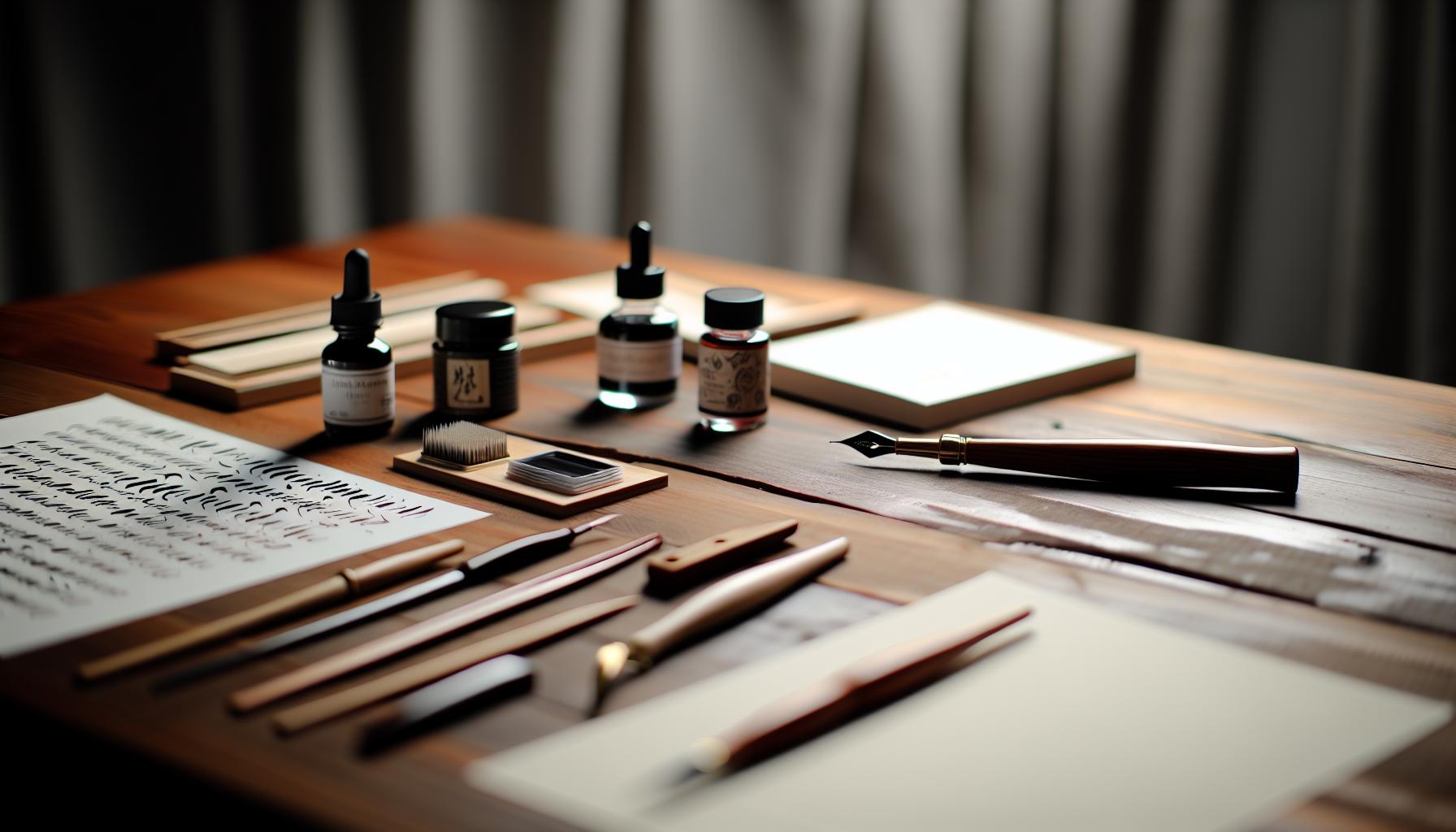
Essential Calligraphy Tools for Beginners
When starting your journey into calligraphy, having the right tools makes all the difference. It’s not just about fancy pens; it’s about finding the ones that suit your style and technique. Here’s a breakdown of that will help you create beautiful lettering with ease.
First, consider investing in a few basic pens. A fountain pen is a great starting point for beginners because it’s easy to use and versatile. They come with a built-in ink reservoir, which reduces mess. For those leaning towards traditional calligraphy, dip pens provide a more authentic experience. They require a bit more practice but allow for more creative flair with interchangeable nibs. You can choose nibs that match your lettering style, whether that’s broad, fine, or even pointed for flourishing.
Next, paper quality can’t be overlooked. You’ll want smooth, thick paper that can handle the ink without bleed-through. Bond or Bristol paper works well for beginners. It’s also helpful to have some gridded or ruled paper for practice, which can guide your letter formation and keep your lines straight. Don’t forget to have a good eraser and pencil handy for sketching or planning your designs before applying ink.
Lastly, a few additional tools will elevate your practice. Rulers, guides, or templates can be indispensable for maintaining consistent letter heights and strokes. And if you’re using dip pens, a ink palette is useful for mixing colors or diluting inks. Having a cleaning solution or a simple cloth is crucial too, especially if you’re working with pigmented inks that can stain.
In summary, starting with basic yet quality tools helps eliminate frustration and encourages experimentation. Remember, the right tools not only enhance your skillset but also inspire your creativity as you explore the art of calligraphy.
Exploring Brush Pens for Calligraphy
Brush pens can be a game changer in your calligraphy journey. If you crave the elegance of traditional calligraphy but want the ease of use and portability, brush pens are your best bet. These versatile tools offer a blend of flexibility and control, making them perfect for both beginners and seasoned artists. You can create stunning letters with varying thickness simply by adjusting the pressure applied. Plus, they come in various types and styles, which makes finding one that suits your aesthetic goals a breeze.
When it comes to brush pens, two main types stand out: felt tip and real brush pens. Felt tip brush pens feature a sturdy, flexible tip that allows for great control and consistent line thickness. They’re fantastic for those who are just starting, as they mimic the feel of a traditional marker while offering more versatility. On the other hand, real brush pens, which use actual bristles, give a more artistic touch and can create varied strokes and textures. They do require a bit more practice to master but offer richer, more organic results.
If you’re just starting, here are a few tips to maximize your brush pen experience:
- Practice basic strokes: Start with simple straight lines and curves. Developing these fundamentals helps build muscle memory.
- Experiment with pressure: Vary your pressure to see how the thickness changes. This is crucial for achieving beautiful lettering.
- Try different paper: The type of paper can drastically affect the outcome. Smooth papers usually allow ink to flow better, while textured paper adds a unique finish.
Lastly, don’t shy away from combining brush pens with other mediums. Use them alongside traditional ink or watercolor to enhance your designs. Whether you’re addressing a wedding invitation or doodling in a journal, brush pens let your creativity flourish with minimal fuss. They truly reflect the personalized touch that makes calligraphy stand out. Dive in, practice, and have fun!
Modern vs. Traditional Tools: What’s Best?
When weighing the benefits of modern versus traditional calligraphy tools, think about what you want to achieve in your practice. Traditional tools like dip pens or fountain pens offer a rich history and a certain craftsmanship that many artists find deeply rewarding. They require careful handling and practice to master, providing an intimate connection between the artist and the medium. Each stroke feels deliberate, often allowing for unique variations in line width and style that can elevate your work.
On the other hand, modern tools, such as brush pens and gel pens, bring convenience and flexibility to the table. They’re user-friendly, portable, and perfect for quick projects or on-the-go creativity. Brush pens, for instance, can mimic the effects of traditional nibs while making it easy to switch styles with a mere change in grip or pressure. This versatility allows beginners and seasoned calligraphers alike to experiment more freely without the often tedious preparation that comes with traditional tools.
Consider your goals when choosing between the two. If you’re undertaking detailed projects, traditional tools might best suit your needs, allowing for a refined touch that can be hard to replicate. However, if you’re focused on quick journaling, crafts, or learning different styles, modern tools could streamline your process.
Ultimately, the choice isn’t about which is better but which aligns with your creative journey. Many calligraphers find joy in using both, leveraging the strengths of each to enhance their artistry. Don’t hesitate to explore and switch it up; the best tool for calligraphy is the one that resonates with your style and project needs.
How to Test Different Pens for Your Style
Finding the right calligraphy pen can feel a bit like dating-you have to try out a few to find the perfect match. It’s all about comfort and style! Start by exploring various styles of pens: dip pens, brush pens, fountain pens, and felt-tip options all offer unique experiences. Each type has its personality and strengths that can enhance your writing in different ways, so getting hands-on is critical for discovering what resonates with you.
Begin by obtaining a range of pens from your local art supply store or online merchants. Look for a mix that represents the different categories. You might want to jot down a variety of letters or shapes using each pen, noting how the grip feels and how easily the ink flows. Don’t be afraid to experiment with line thickness and pressure; this can dramatically change your writing. Pay attention to whether the pen feels comfortable after extended use or if it causes any strain.
Also, consider the paper you’re using. Pair different pens with various types of paper to see how each combination performs. For instance, some pens shine on smooth, coated paper, while others might struggle with rough textures. Test your results by writing the same words or phrases with each pen to effectively compare their performance. You might be surprised by which combinations highlight your work best!
Finally, take your time with this process. There’s no rush to pick a pen on your first try. Engage with your writing community, join workshops, and gather insights from other calligraphy enthusiasts. This social aspect can offer invaluable advice and perhaps lead you to pens you hadn’t considered. The goal is to find an instrument that not only looks good but also feels right in your hand and delivers the creative expression you seek. Happy writing!
Common Mistakes When Selecting Calligraphy Pens
Selecting the right calligraphy pen can lead you down a winding path filled with pitfalls, especially if you’re just starting out. Many beginners make common mistakes that could easily be avoided if they knew what to look for. One major error is not considering the style of calligraphy they want to pursue. For instance, a brush pen might be perfect for modern calligraphy, but it could feel awkward if your heart is set on traditional script. Understanding your preferred style before diving into pen selection can save you time and frustration.
Another frequent misstep is focusing solely on aesthetics. While a beautiful, ornate pen might catch your eye, it’s essential to ensure it fits comfortably in your hand and suits your writing technique. A stunning pen that’s hard to control will hinder your practice rather than enhance it. Test various pens to find the right balance of beauty and functionality.
Many newcomers underestimate the importance of nib quality. A high-quality nib can make all the difference in ink flow and line variation. Cheap pens often come with inconsistent nibs that can ruin your efforts. Don’t shy away from investing in reputable brands with good reviews-your writing deserves it. Additionally, don’t overlook the impact that different ink types and paper can have. Experimenting with these can elevate your work significantly.
Lastly, a common blunder is failing to seek guidance. There’s a rich community of calligraphers out there, and joining workshops or online forums can provide invaluable insights. Learning from others’ experiences can help you avoid mistakes and encourage you to explore tools you might not have considered. Gaining knowledge from the community not only enhances your skills but also enriches your journey into the world of calligraphy.
The Role of Paper in Calligraphy Success
Choosing the right paper can be as crucial to your calligraphy success as selecting your pen. The texture, weight, and absorbency of the paper will directly influence how your ink flows, how your nib glides, and ultimately, how your finished work looks. Using the wrong type of paper can lead to feathering, bleeding, and an uneven finish that may frustrate even the most skilled calligrapher. So, what should you look for in calligraphy paper?
First, consider the texture. Smooth paper is ideal for finer nibs and will offer a clean glide, making it perfect for delicate scripts. On the other hand, if you’re using a broad-tipped pen or a brush pen, you may want a slightly textured paper that can hold the ink better and showcase the variations in stroke width. For example, watercolor paper can be excellent for brush calligraphy due to its absorbency and ability to hold heavy pigments without warping.
Next, think about the weight of the paper. Heavier papers (typically 250gsm and above) are less likely to warp or buckle, making them a favorite among calligraphers who enjoy ink that saturates the page. Lighter papers can work well for practice, but they may not hold up to more intensive techniques or heavier inks.
Choosing the Right Paper for Different Styles
The style of calligraphy you’re pursuing also informs your paper choice. Here are a few tips:
- Modern Calligraphy Try using Bristol board or high-quality smooth papers that allow for fluid movements.
- Traditional Scripts: Go for textured papers like parchment that deliver a classic look and feel.
- Brush Calligraphy: Watercolor paper works wonders; it allows vibrant inks to flow beautifully.
Finally, always keep in mind that experimenting with different papers can yield surprising results. A binder to keep notes on the outcomes can help track your findings, saving you time and enhancing your craft. Your choice of paper is not just a surface; it’s a partner in your creative journey, so choose wisely for the best calligraphic results!
Inspiration: Learning from Calligraphy Masters
Great calligraphy isn’t just about the tools you choose; it’s also about the inspiration you draw from those who’ve mastered the craft before you. Learning from calligraphy masters can open your eyes to new techniques, styles, and the nuances of penmanship that elevate your work. Top calligraphers have honed their craft by experimenting with different pens and ink varieties, discovering what truly resonates with their artistic vision. By observing and studying their methods, you can find a path that feels authentic to you.
Take the time to explore works by celebrated calligraphers such as Christine M. Baird and Debi Sementelli. Their distinct styles showcase how pen choice can influence the overall aesthetic of calligraphy. For instance, Baird often uses pointed pen nibs for her elegant scripts, while Sementelli is known for her brush lettering that highlights the fluidity of the brush pen. Study their tools and the techniques they employ; you might find that a specific nib or pen type draws you toward a style you never considered before.
In practical terms, consider joining workshops or online classes where these masters share their insights. Many authors and calligraphy influencers publish tutorials or live demonstrations, revealing the subtleties of their processes. This first-hand learning experience can be invaluable, so don’t shy away from asking questions or seeking feedback. A community of fellow learners and experienced calligraphers can enrich your journey and invigorate your practice.
Finally, don’t forget to keep a notebook of your inspirations and experiments. As you try different pens and techniques inspired by the masters, document your findings. The process of trial and error can lead to breakthroughs-those “ah-ha!” moments when something clicks, and you discover your unique style. Take cues from the greats, but let your creativity flourish by embracing your individuality in every stroke.
Advanced Techniques with Specialized Pens
When it comes to elevating your calligraphy game, specialized pens offer a world of possibilities that can help you unlock your unique style. With the right techniques and tools, you can create mesmerizing scripts that captivate and inspire. Each type of specialized pen, whether it’s a pointed pen for exquisite detail or a brush pen for fluidity, has its own set of advanced techniques that can transform your work.
Understanding Specialized Pens
Using a specialized pen isn’t just about picking the right tool; it’s about understanding how to maximize its potential. For example, when using a dip pen with a flexible nib, you can vary the pressure to produce thick and thin lines, a fundamental technique in calligraphy known as “contrast.” This requires practice, but once mastered, it adds a dynamic quality to your letters. To practice this, work on making simple strokes where you gradually increase pressure to create thicker lines, then release pressure to return to thinner lines.
Experimenting with Technique
Brush pens are another fantastic tool in the calligrapher’s toolkit, allowing for great expression in your writing. They require a different technique compared to dip pens. To get the most out of a brush pen, focus on wrist movement rather than finger movement. This will give you smoother transitions and greater control over your line thickness. Consider practicing circular strokes and loops to develop a feel for how the bristles respond to pressure.
Advanced techniques like blending colors with brush pens are also fascinating to explore. With practice, you can create gradients that add depth to your calligraphy. One simple method is to use two different brush pens-one for your base color and another for the shade. Start with one color, then gradually introduce the second color to create a seamless transition.
Creating Texture and Dimension
Don’t shy away from adding texture to your calligraphy. Techniques such as stippling or using a variety of pen types (like a gel pen for highlights) can bring your lettering to life. Play with layering your inks and add decorative flourishes that echo the characteristics of the letters. Think of incorporating watercolors as backgrounds or using metallic inks for accents to make certain parts of your work pop.
With practice and a willingness to experiment, specialized pens will not only assist in creating beautiful pieces but also push you toward developing a calligraphy style that’s unmistakably your own. So grab your pens and start exploring these techniques; the possibilities are as vast as your creativity allows!
Frequently asked questions
Q: What’s the best pen for beginners in calligraphy?
A: For beginners, a dual-tip brush pen like the Tombow Fudenosuke is ideal. It combines flexibility and control, making it perfect for practicing various styles. Consider starting here to develop your technique before advancing to more specialized tools.
Q: How do I choose the right ink for my calligraphy pen?
A: The right ink depends on your pen type. For dip pens, use fountain pen inks or specially formulated calligraphy inks. For brush pens, opt for water-based inks to avoid clogging. Always test inks on your chosen paper to ensure compatibility.
Q: Can I use regular markers for calligraphy?
A: While you can use regular markers, brush markers or calligraphy pens offer better control and are designed for artistic strokes. Think about the effects you want to achieve; specialized tools will enhance your work significantly.
Q: What size nib should I use for different styles of calligraphy?
A: For large scripts, use broader nibs (like 3.5mm or wider) to create bold strokes, while a fine nib works best for detailed lettering. Experiment with different sizes to see which complements your style as outlined in your main content.
Q: How important is the paper choice in calligraphy?
A: Paper choice is crucial in calligraphy. Smooth, bleed-proof paper is recommended to prevent ink from feathering or bleeding, providing a clean finish. Look for paper specifically designed for calligraphy to enhance your work’s quality.
Q: What are the advantages of using a fountain pen for calligraphy?
A: Fountain pens provide consistent ink flow and are versatile for various styles, from modern to traditional scripts. They allow for pressure sensitivity, giving you beautiful line variations that enhance lettering as discussed in your article.
Q: How can I practice calligraphy effectively with different pens?
A: Practice with various pens by dedicating separate sessions to each type. Focus on basic strokes first, then progress to letters and words. Using tracing paper over printed letters can help improve confidence and technique before moving on to freehand work.
Q: Should I invest in expensive calligraphy pens as a beginner?
A: It’s wise to start with affordable, quality tools that allow for exploration before investing in high-end pens. Try a few options from different price ranges to find what you prefer. This trial phase will guide your future purchases effectively.
Key Takeaways
Choosing the right pen for your calligraphy can transform your writing experience. Remember, the right tool enhances your personal style and elevates your work. Don’t hesitate! Dive into our detailed guides on the best calligraphy inks and essential techniques to refine your skills-your creative journey awaits.
Have questions or want to share your experience? I’d love to hear from you in the comments below! And if you found this information helpful, consider signing up for our newsletter for more tips and inspiration. Keep exploring our site to unlock the full potential of your calligraphy artistry, and remember: the pen is just the beginning!